
Can you name the one listing you're pushing, the one phrase you want it to rank for, and how you'll prove it worked? If you can't, you're not ready to edit a title, buy ads, or start a campaign. You're guessing, and guessing is how Etsy sellers waste weeks on phrases nobody buys from.
This keyword research checklist is a pre-launch gate, not a brainstorming exercise. Each step is a pass or fail check. Your listing either clears it or you stop and fix it before you spend more effort. You'll define one goal, build phrases from your actual product, check what buyers type on Etsy, study competitors, test demand and difficulty, and cut anything that doesn't match buyer intent.
You'll finish with mapping and tracking, because a list of phrases on a spreadsheet does nothing on its own. The work only counts when one primary phrase is assigned to one listing and you record where it started.
That discipline is normal outside Etsy too. In 2024, 87.39% of more than 140 surveyed businesses said they used keyword research as part of their content marketing and SEO activities, according to the Databox State of Content Marketing and SEO report. Use these nine steps in order. Don't skip to the phrase you like best.
1. 1. Define the Goal and Pick One Target Listing
A ceramic mug maker heading into winter gift season starts with the best-selling mug: clear photos, accurate details, and reviews already on the page. A printable planner seller does the same with one new January release. Five planners at once splits the effort and leaves you with nothing you can measure.
Write the goal in one sentence before you search for anything. Get this mug into the top 15 results for one agreed phrase before the holiday shipping cutoff. A new shop can use the same shape of sentence for its flagship product and a date on the calendar. Name one outcome only: visibility, seasonal sales, or a lift for a product that already sells. Then add the end date. Without a deadline, you keep editing and never learn whether the work paid off.
What Pass Looks Like
One listing named: The URL is saved, and you stick with that listing through the rest of the checks.
One outcome named: One result you can check later, written in that single sentence.
One deadline set: The selling window has a clear end, so later steps can judge timing.
Google's SEO Starter Guide covers areas like titles, navigation, and content creation. Structured relevance still beats scattered keyword placement, and it starts only after the listing, the phrase, and the date are fixed. I would stop here if you cannot say all three without opening a spreadsheet.
2. 2. Brainstorm Seed Phrases From the Product
Start with the words a buyer would type if they'd never seen your shop. List your product type, material, style, use, recipient, and occasion before you open any tool. A jewelry maker might write dainty gold necklace, minimalist pendant, and birthday gift for her. An art seller might write watercolor botanical print, wall art for bedroom, and nature print.
Write at least 20 seed phrases and don't judge them yet. Judgment comes later in this checklist. Right now you're forcing yourself to think like a buyer, and buyers search in different states of mind. Some know exactly what they want. Others are on a gift mission or just browsing for ideas.
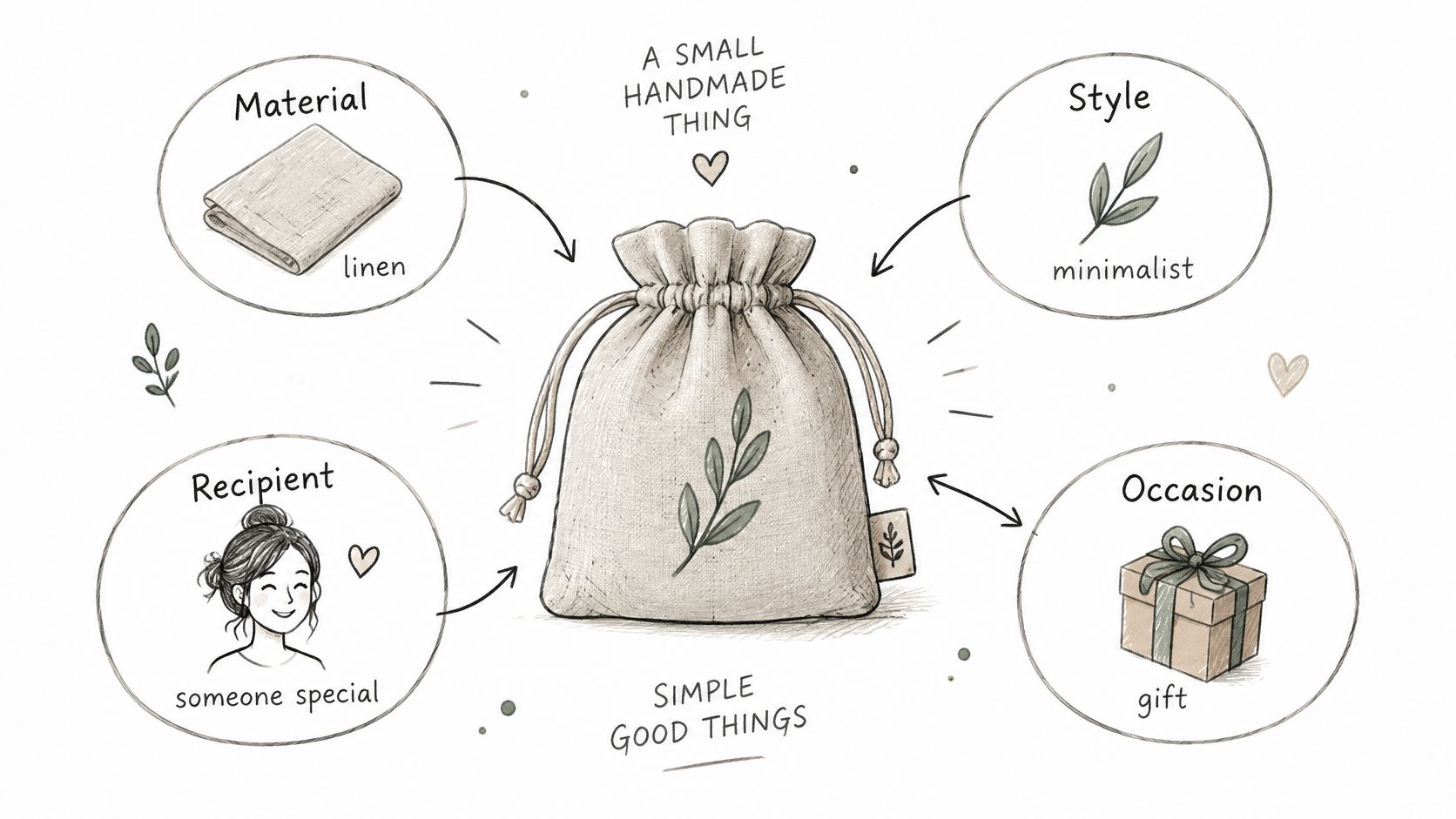
That mix is real on Etsy. Reported 2025 Etsy buyer-survey figures show 45% shopped for a specific need, 31% sought custom or personalized products, 29% searched for a gift, and 24% browsed without a defined purpose, according to the Etsy statistics report from Market Intelligence Tools.
So capture both kinds of language. Include the defined-need phrases and the discovery phrases tied to gifts, personalization, and occasions. You'll sort them by intent in step seven, but you can't sort what you never wrote down.
3. 3. Mine Etsy's Own Search Suggestions
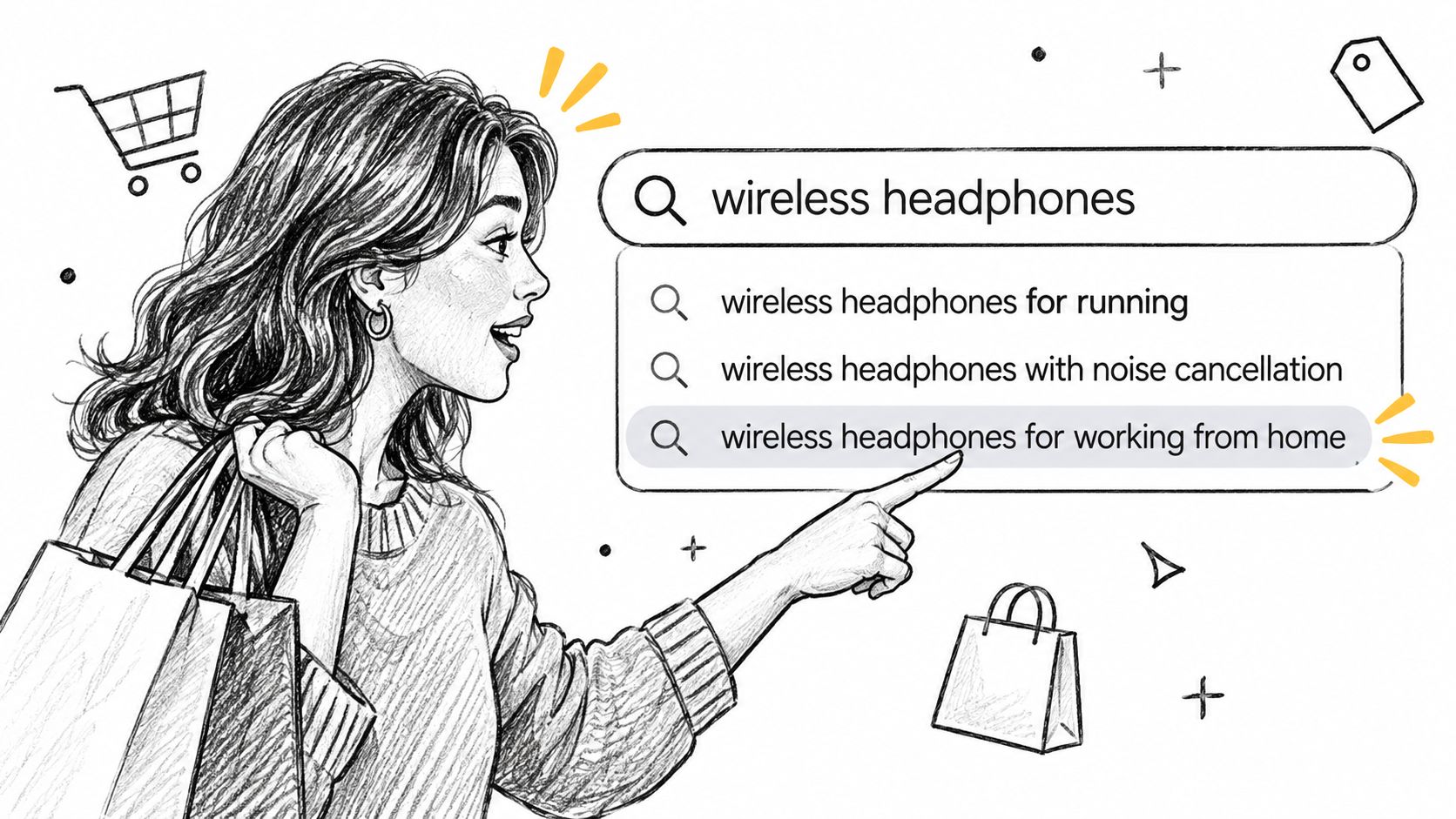
Type each seed phrase into Etsy's search bar and write down what autocomplete offers you. Those suggestions come from what shoppers type on Etsy, so they're closer to real demand than any guess you make at your desk. Type wedding guest dress and you'll see variations like plus size or boho. Type digital planner and you'll find format-specific versions like GoodNotes.
Work through your seed list slowly. Add one letter after a phrase to surface more suggestions, and record every suggestion with three or more words. Single words are too broad for a focused ranking push, and they'll fail later checks anyway.
Do this in a private or logged-out window. Results shift based on who is searching. Google notes results can vary because of location, language, device type, current searches, and, when enabled, search history or other account activity, in its guide to how search results are personalized. Etsy works the same way in practice, so a signed-in search shows you a version shaped by your own history.
Practical rule: If a phrase never appears in autocomplete in any form, keep it on your list but mark it low confidence. Don't make it your primary phrase yet.
4. 4. Study Competing Listings
Search your strongest seed phrases and open the listings on the first page. You're not copying anyone. You're looking for repeated patterns across sellers who already rank, because repetition tells you what Etsy and buyers respond to for that phrase.
Review at least ten top listings per phrase. For personalized leather keychain, you might notice several winners add custom initials and gift for dad in their titles. For printables, top listings often name the format directly, like PDF or instant download. Write down the words that keep showing up, plus the attributes and categories those sellers chose. Titles alone don't tell the whole story.
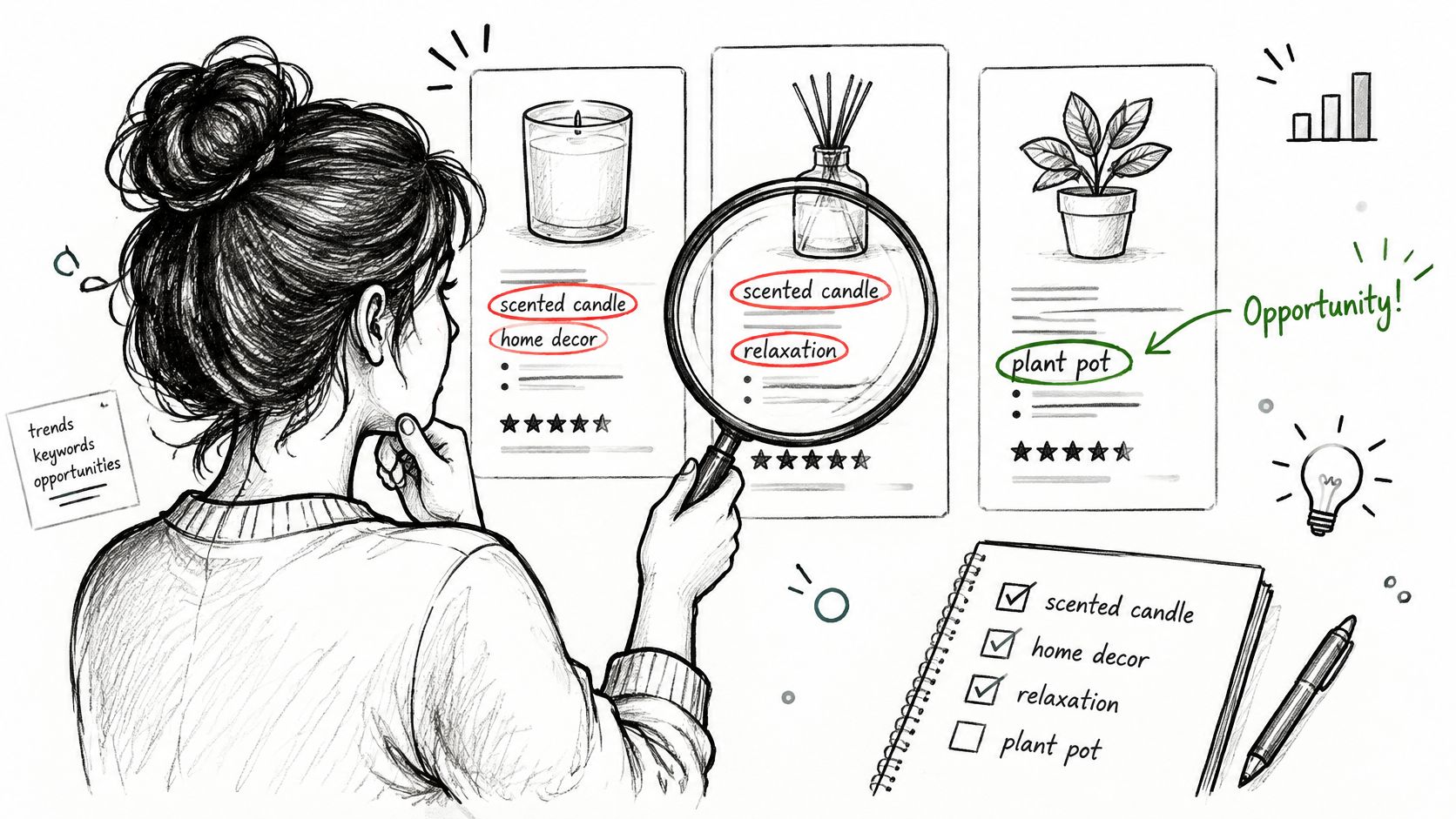
What to Record for Each Phrase
Count how many of the first results match the phrase, and note where the results drift into a different product. That drift is useful. It shows you whether the phrase has clear intent or whether Etsy itself is unsure what buyers mean.
Visibility alone doesn't prove a phrase works. A peer-reviewed study of approximately 1.63 million searches across 120 keywords during a one-month period in Korea found post-search clicking was low and concentrated on organic results, according to the Columbia Business School consumer click behavior study. Ranking near relevant listings matters only if buyers recognize your product as the answer.
5. 5. Check Search Volume and Trend Data
Etsy doesn't publish exact search volume. Treat every number you find as an estimate, and compare candidate phrases against each other rather than trusting one tool. A keyword tool for Etsy can help you sort relative demand, but trend direction matters more than a precise count. You need to know whether interest is rising, falling, or tied to a season. Write down that direction for every phrase on your shortlist.
Look at least twelve months back. Comparing custom pet portrait with pet memorial portrait might show one spiking around holidays. A printable seller might see wedding invitation template climb sharply in spring. Seasonality changes when you should launch, not just what you should target. Note the peak month and work backward from it.
Compare a multi-year view against the last 90 days. A recent spike with no history behind it can be a fad or a single viral post. A gradual climb across several seasons is safer evidence that buyers keep returning to the phrase. If the line is flat or jumps around with no pattern, you have no timing signal to plan around.
Timing matters because Etsy demand can move fast around seasonal events. Start about one to three weeks before a peak, since rankings take time to build. This step is a gate, not a scorecard: if demand looks flat, erratic, or impossible to read, park the phrase and move to the next candidate.
6. 6. Assess Competition and Realistic Difficulty
A popular phrase can still be a bad choice. Open the first page for each candidate and ask one honest question. Could your listing, with its current photos, price, and reviews, sit next to these listings and hold its own? If the page is full of established shops with thousands of sales, a new or small listing will struggle there no matter how good your title is.
That's why sellers choose handmade ceramic coffee mug set over coffee mug. The longer phrase has fewer strong competitors and describes a narrower buyer need. Difficulty isn't about the number of listings alone. It's about the strength of the listings already holding the spots you want.
A Simple Screening Test
Volume can be a warning sign by itself. Google's Keyword Planner guidance on using the tool says keywords with extremely high volume, generally 10,000 or more average monthly searches, are typically more difficult to compete for. Use that as a flag for closer review, not as a reason to chase the biggest number.
Favor phrases of three or more words where a top 15 position looks achievable inside your planned window. If you can't picture your listing on that first page, the phrase fails this step. Move to the next candidate instead of forcing it.
7. 7. Prioritize by Relevance and Buyer Intent
Cut any phrase that doesn't describe your exact product, even if it gets traffic. A buyer searching diy wall art wants a project, not your finished print. A buyer searching how to make jewelry wants instructions, not your bracelet. Those clicks cost you time and teach Etsy the wrong thing about your listing.
Keep phrases where the buyer is ready to purchase something like yours. Birthday gift for mom personalized signals a buying mission. What to get mom signals research. The first phrase belongs on your short list. The second doesn't, however much demand it has. Checking top keywords on Etsy can show you popular phrasing patterns, but popularity never overrides fit with your listing.
A phrase passes this step only if a buyer who typed it would be happy to land on your exact product, in your material, at your price point.
Demand also doesn't equal reachable traffic. SparkToro and Datos reported that 58.5% of U.S. Google searches and 59.7% of European Union searches ended without a click in 2024, in the 2024 zero-click search study from SparkToro. Those figures cover Google, not Etsy, but the lesson transfers. Rank your top five phrases by fit first, then by demand, and keep only phrases where the next step is viewing or buying a product.
8. 8. Favor Specific Multi-Word Phrases
Rustic farmhouse wall clock beats clock. Sterling silver moon necklace for women beats necklace. The longer phrase names product type plus material, style, or buyer, so the query carries a clear subject and the shopper scanning results sees a match. A single word drops you into a queue with every seller of that object on the platform, with nothing in the query to separate you.
Build finalists by stacking attributes: product type, material, style, occasion or recipient. Personalized baby name sign clears that stack. Name sign does not. Take the raw phrasing you pulled from Etsy's search suggestions and test the stacked version against it, then keep whichever sounds like something a buyer would type.
Expect lower volume on the longer phrase. That trade is usually worth taking. Volume estimates run rough in narrow categories: one review of keyword research statistics reports that Google Keyword Planner overestimates volume for 91.45% of keywords in an Ahrefs study of 72,635 terms, according to the Resourcera keyword research statistics review. A long-tail phrase showing low or zero volume still sells when it matches the words shoppers use for your product.
Keep the phrasing readable. If a phrase stumbles when you say it aloud inside a title, buyers will stumble on it too, and repeating it three times will not repair that. More patterns for Etsy long-tail keywords show how these combinations work across categories.
Single-word targets fail this check. They cannot carry material, occasion, or recipient, and they do not describe a clear buyer need, which is why single-word keywords are not accepted for focused campaigns. Three words is the working minimum. Before you commit, point to the material, the buyer, or the occasion inside the phrase. If none of the three appears in the wording, it is too broad to carry a listing.
9. 9. Map Keywords to Listings and Track Results
Assign one primary phrase to your target listing. Place it naturally in the title, use matching attributes, and support it in the description with your secondary phrases. Don't spread the same primary phrase across several listings, or you'll compete with yourself and muddy your results.
Before you change anything, record your starting position. Search your phrase on etsy.com in a fresh private window, signed out, with no filters and the default sort. That's the same method we use to check rankings, and it keeps your measurements consistent. A seller targeting handmade leather wallet for men should log the position before the title edit, then check weekly under the same conditions.
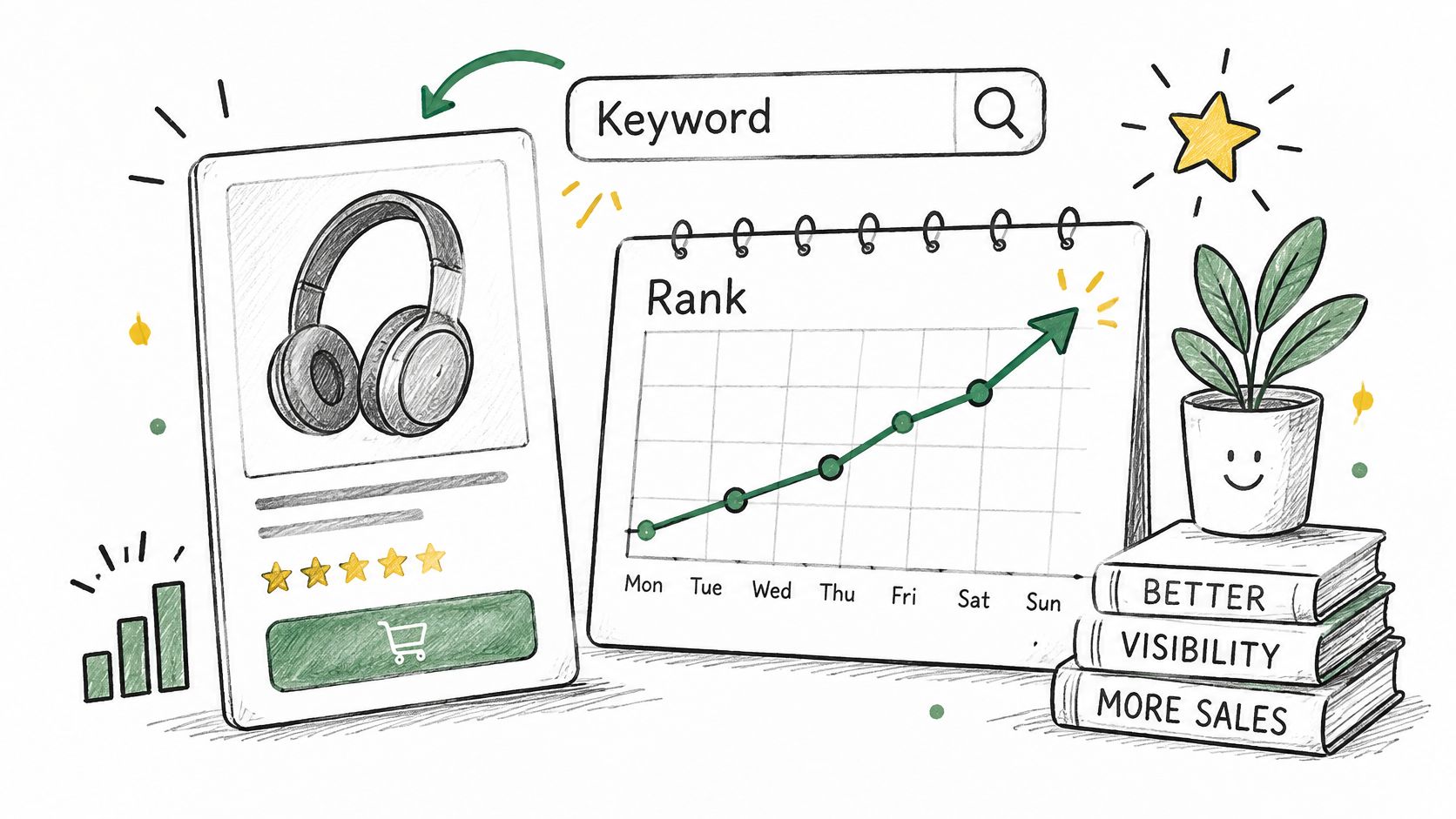
Check weekly, not daily. Small daily swings are normal and they'll push you into pointless edits. Keep a simple log with the date, the change you made, and the position you saw, so you can connect cause and effect later.
Also separate ranking from sales in your notes. Google's Keyword Planner support thread on searches versus impressions makes the same distinction for search data, where volume reflects searches under selected settings while impressions depend on other factors. Treat position, visits, and orders as three different measurements.
Keyword Research Checklist at a Glance
Step | Main activity | Tools or data needed | Time investment | Key output |
|---|---|---|---|---|
1. Define the goal and pick one target listing | Select one listing and set a measurable goal and timeframe | Listing details, product category, target buyer, campaign window | Focused planning | One target listing and a clear goal |
2. Brainstorm seed phrases from the product | List buyer-friendly phrases about the product, materials, uses, style, and occasions | Product details and buyer perspective | No tools required; brainstorming | A broad list of seed phrases |
3. Mine Etsy's own search suggestions | Expand seed phrases using Etsy autocomplete | Etsy search bar and seed phrases | Quick, manual search | Relevant Etsy search suggestions |
4. Study competing listings | Review top listings and note recurring keywords, attributes, and gaps | Etsy search results and competing listings | Manual review of multiple listings | Competitor keyword patterns and opportunities |
5. Check search volume and trend data | Compare phrase popularity and seasonal trends | Trend data and third-party keyword tools | Research across a suitable time period | Relative demand and timing insights |
6. Assess competition and realistic difficulty | Evaluate competing listings and the likelihood of ranking | Listing counts, top results, shop strength, and difficulty estimates | Manual assessment and data review | A realistic set of target phrases |
7. Prioritize by relevance and buyer intent | Rank phrases by product fit and purchase readiness | Product details, buyer needs, and phrase data | Judgment-based review | A short list of high-fit phrases |
8. Favor specific, multi-word phrases | Choose natural, specific phrases that describe the buyer's need | Product type, material, style, recipient, or occasion | Phrase refinement | Specific long-tail keyword targets |
9. Map keywords to listings and track results | Assign a primary phrase, use it in listing fields, and monitor performance | Listing fields, baseline ranking, sales data, and tracking log | Ongoing weekly tracking | Optimized listing and measurable performance record |
Run the Checklist Then Commit to One Phrase
Your listing is campaign-ready only when it clears every gate. You've named one listing and one goal with a deadline. You've built seed phrases from the product itself, checked them against Etsy's own suggestions, and studied the listings that already rank. You've compared demand and trends without trusting any single number, judged whether the first page is realistically within reach, and cut every phrase that doesn't match what a buyer wants to purchase.
What's left should be a short list of specific, multi-word phrases that describe your exact product in language buyers already use. From that list, you commit to one primary phrase, map it to one listing, record your baseline position, and track it weekly under fixed conditions. If a phrase fails any step, it doesn't get a pass because you like how it sounds. You fix the listing, pick a better phrase, or wait for the right season.
That's the value of a keyword research checklist. It stops you from pouring effort into phrases that were never going to work for your shop, your market, or your timeline. It also gives you a clean record of why you chose your phrase, which matters when you review results later and need to decide whether to hold, adjust, or start over with a new candidate.
If you'd rather hand the ranking work to a specialist after your research is done, we run fixed-term campaigns for one Etsy listing and one agreed search phrase of three or more words. We aim to place your listing among Etsy's first 15 results within 9 to 21 days of confirmed payment, and every campaign is backed by a guarantee of top 15 ranking within that window or your money back. In one case study, a pet-supplies dog collar listing moved from #183 to #8 in 30 days using one search phrase. Campaigns run for 30, 90, or 180 days in the USA or UK search market, with no Etsy account access required and no automatic renewal.
Run your next listing through all nine steps today, write down your baseline position before you change a single word, and if your chosen phrase clears every check but you want help reaching the top 15, send us your listing URL and your phrase at Upglider.com for a pre-payment assessment before you commit to a campaign.