The best Etsy keyword tool isn't automatically the one with the biggest keyword database. One platform may generate long-tail phrases, another may estimate demand, a third may show competitor listings, and Etsy's own research tools may provide the closest available view of actual marketplace behavior. Those answers aren't interchangeable.
That distinction matters because Etsy doesn't publish a universal marketplace-wide search-volume figure. Its native analytics are designed around individual shops, including traffic from Etsy search, the Etsy app, Etsy pages, and Etsy marketing or SEO, rather than a complete search-index dataset. Etsy's Shop Stats guidance explains the shop-level scope.
So compare these tools by the job you need done: first-party validation, long-tail discovery, competitor research, trend timing, listing analysis, or rank tracking. Treat third-party volumes as models, not ground truth. Etsy Marketplace Insights should sit at the validation stage, while specialist tools can make discovery and implementation faster.
1. eRank
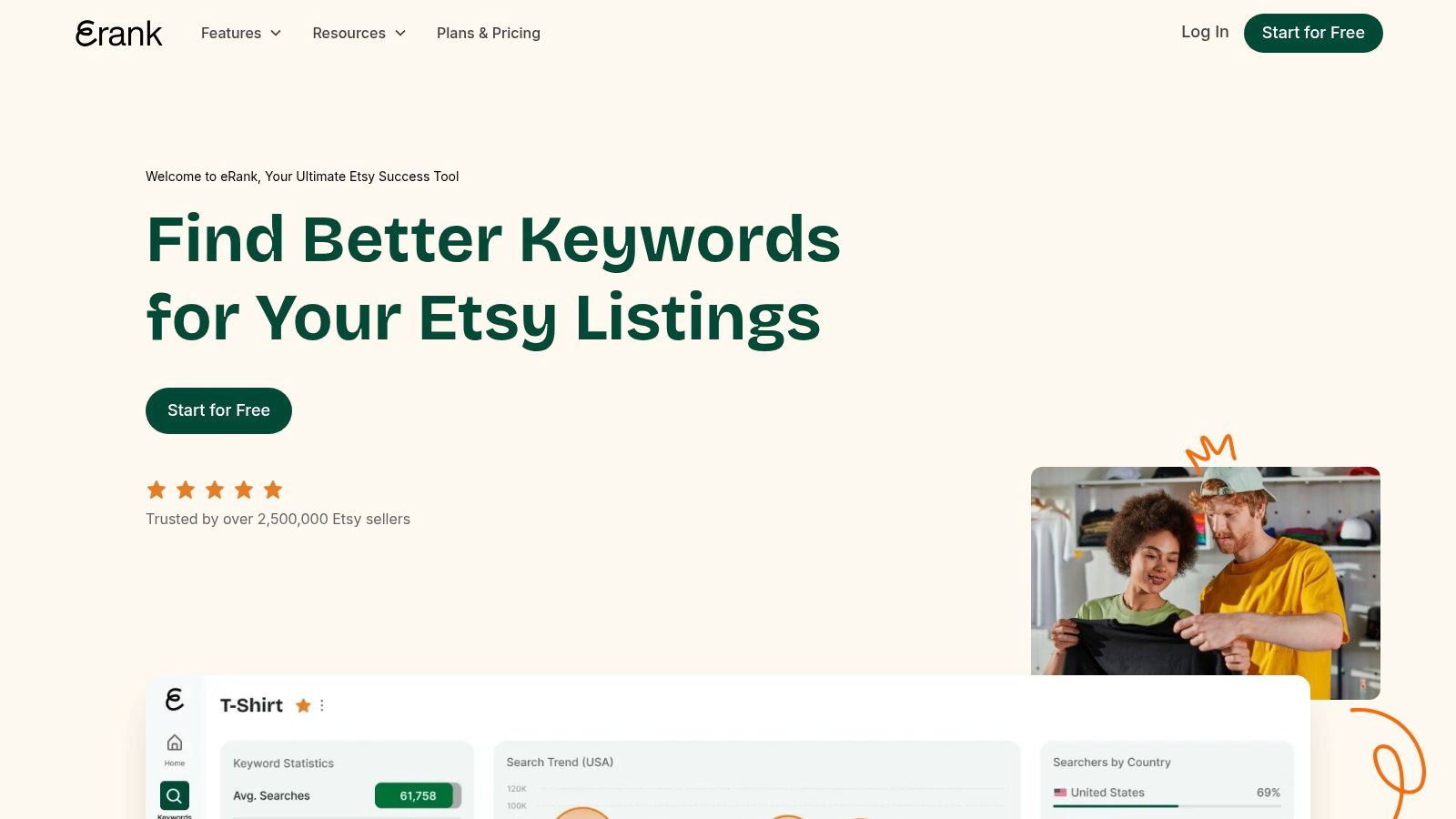
eRank is a strong choice when Etsy research needs to extend beyond one listing. Its Keyword Tool compares up to four phrases and presents signals such as search volume, click-through rate, and competition. Those figures help you sort ideas, but they remain modeled estimates because Etsy doesn't disclose official marketplace-wide keyword totals.
The broader suite is where eRank becomes more useful. Rank Checker shows where a listing appears for a query, while Trend Buzz and “Trending in Etsy Categories” help identify topics worth investigating. Competitor and shop tracking add context that a standalone keyword generator can't provide, and listing audits connect research to actual title, tag, and listing decisions.
Where eRank fits
eRank works well as a repeat-use research desk. Its affordable entry tier includes meaningful daily lookup limits, and its documentation makes plan boundaries relatively clear. That matters for sellers who want to check ideas regularly instead of paying for a tool they only open during a product launch.
The trade-off is density. New sellers may find the interface busy, especially when several modeled metrics appear beside one another. Use eRank to shortlist phrases, inspect competitor patterns, and monitor rankings, then validate promising terms with Etsy's native data. A practical Etsy keyword research workflow should keep those stages separate.
2. Marmalead
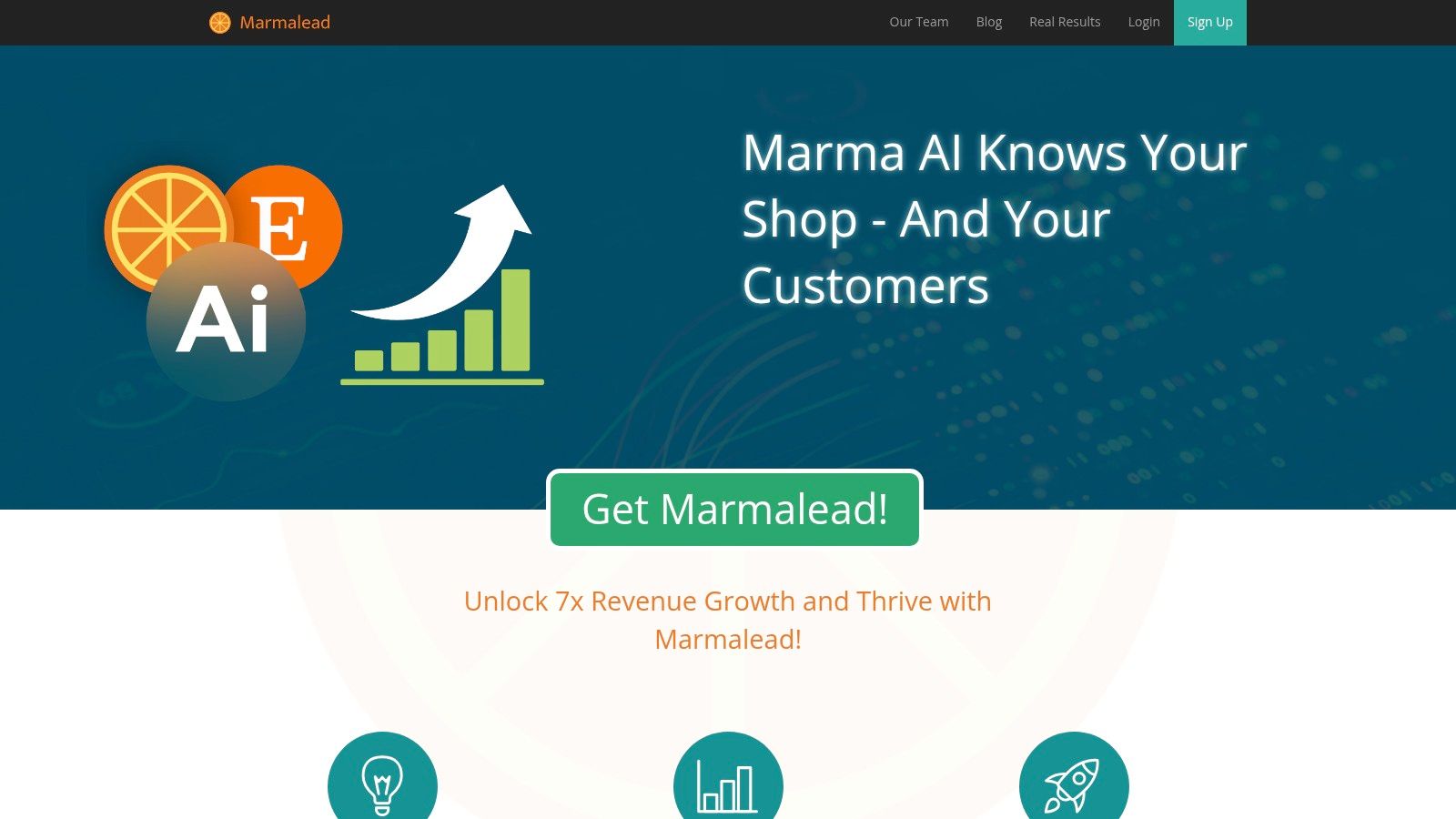
Marmalead takes a more merchandising-oriented approach to Etsy keyword research. Its search tool adds price spread, average-price context, and competition signals, so you can ask more than “what phrase should I use?” You can also ask whether the products ranking for that phrase sit within a price range your product can realistically compete in.
That makes Marmalead particularly useful for sellers who treat keyword selection and product positioning as one decision. A phrase may look attractive in isolation, yet the listings attached to it may be priced, styled, or packaged very differently from your offer. Marmalead's pricing context helps expose that mismatch before you rewrite a listing around the term.
AI support and browser research
The platform now includes Marma AI, a listing writer and guidance layer for titles and tags. Its Chrome extension brings insights into the browsing experience, which is useful when you're examining Etsy search results and want research signals without constantly switching tabs.
Marmalead's advantage is integration. Its weakness is commitment risk for cautious testers, particularly where annual or lifetime offers are involved. The extension advertises a 14-day money-back guarantee, so confirm current terms before purchasing. Deeper pricing analytics also require more interpretation than a simple keyword list.
Practical rule: Use Marmalead when the keyword question includes price and merchandising. Choose another tool if you only need fast phrase expansion.
3. Alura
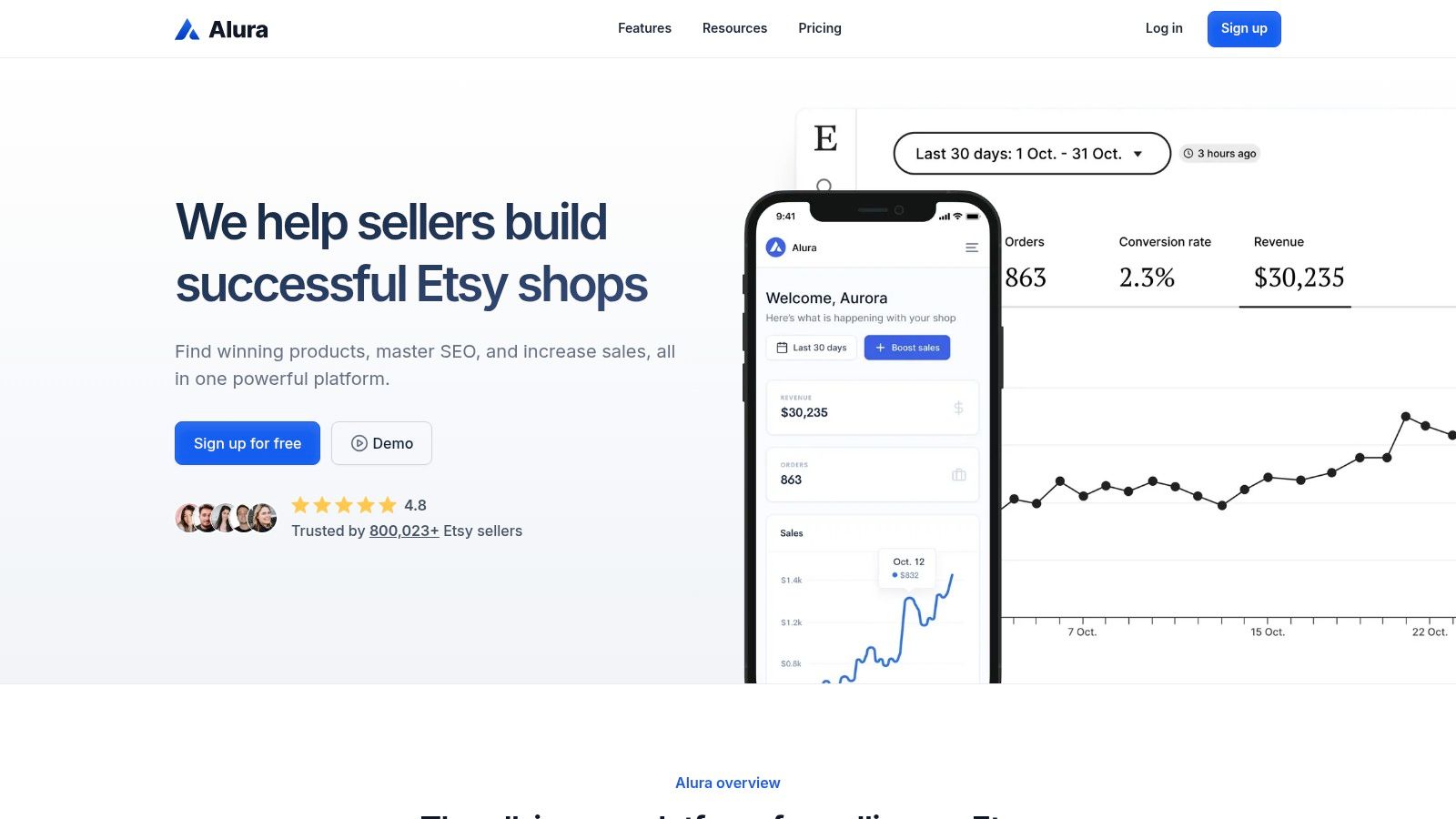
Alura is designed for sellers who want one approachable path from idea discovery to listing edits. Its keyword tools combine Etsy autocomplete enrichment with trending-keyword discovery, then connect that research to product and shop databases. You can investigate a phrase, inspect related products, and move toward a listing decision without building a workflow across several specialist platforms.
The interface is one of Alura's clearest strengths. It feels accessible to newer sellers who may find larger analytics suites intimidating. A usable free plan also makes it practical for testing the workflow before committing to a paid plan.
From research to listing decisions
Alura's listing scoring and A/B testing tools give the platform a practical implementation angle. Marketing utilities and workflow integrations extend that usefulness beyond keyword discovery. Sellers can move from “which phrase might fit?” to “which version of this listing should I test?” without leaving the same environment.
The trade-off is depth. An all-in-one platform often provides good coverage across many jobs without matching the specialist depth of a dedicated rank tracker or advanced competitor database. Its modeled sales and revenue estimates also need a sanity check. They can help compare listings directionally, but they shouldn't be treated as verified seller income.
Use Alura when simplicity and workflow continuity matter more than maximum analytical detail. It suits a seller who wants to research, score, edit, and test in one place.
4. EverBee
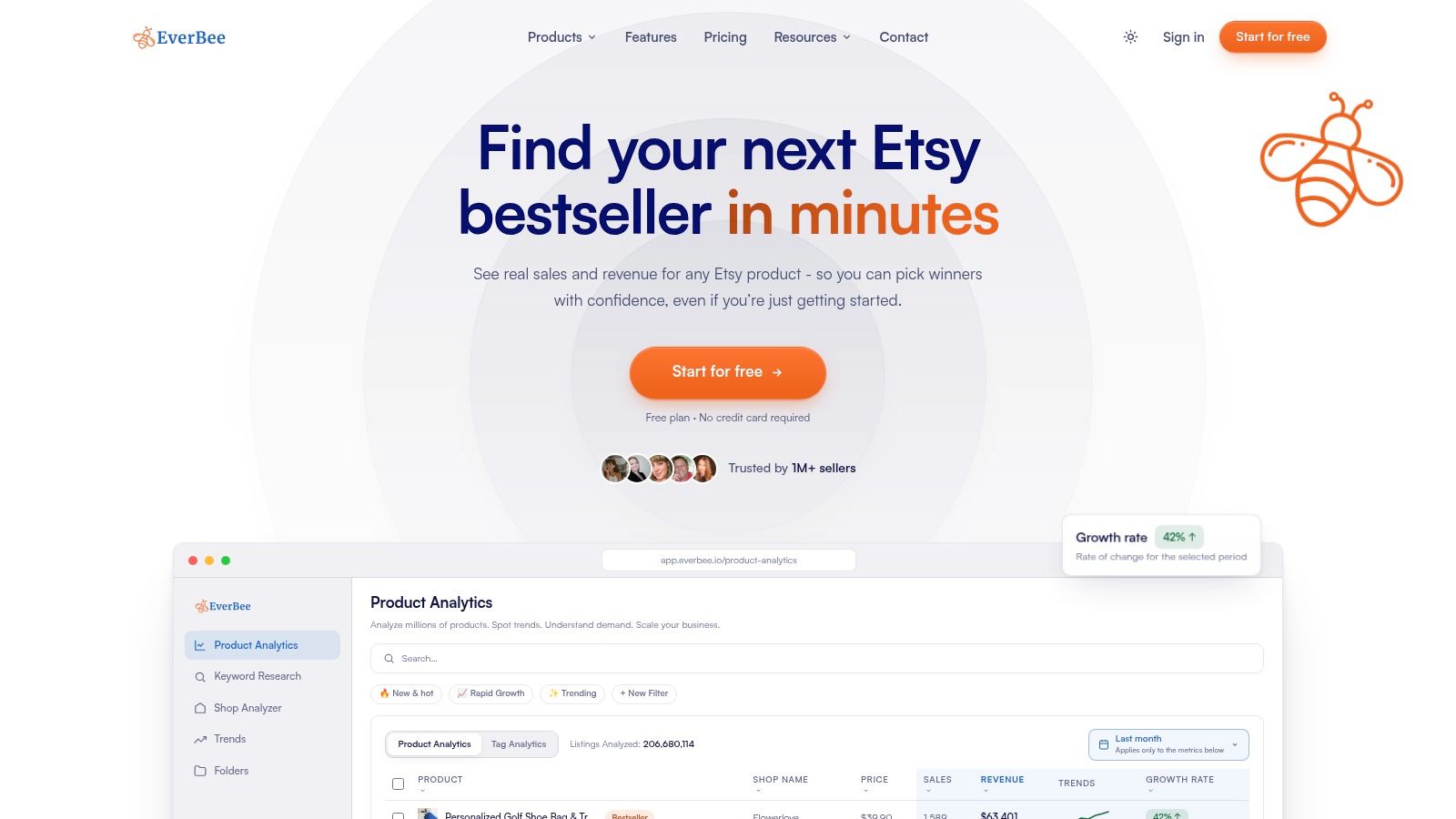
EverBee puts research directly into Etsy through a Chrome-extension-first experience. Product analytics appear in search results, making it fast to scan listings while you browse. The extension surfaces signals such as estimated sales, revenue, and conversion rate, alongside product trends and growth-rate metrics.
That visual workflow changes the research question. Instead of exporting a keyword list and examining results later, you can inspect the products competing for a phrase at the moment you discover it. This is especially useful for spotting apparent bestsellers and comparing product formats before you invest time in a listing concept.
Fast validation with a clear limitation
EverBee's Keyword Score and Tag Analyzer add tag-level context, while AI actions and MCP integration support newer assisted workflows. The free Hobby plan is useful for light exploration, so a seller can test the browsing experience without immediately adopting a larger subscription.
The central limitation is its dependence on the browser extension. If you prefer a standalone dashboard, the experience may feel constrained. Sales, revenue, and conversion figures are estimates. Treat them as comparative clues, not confirmed performance data.
EverBee works best at the in-search validation stage. Use it to identify patterns among visible listings, then return to Etsy Marketplace Insights before treating a phrase as a demand signal.
5. Sale Samurai
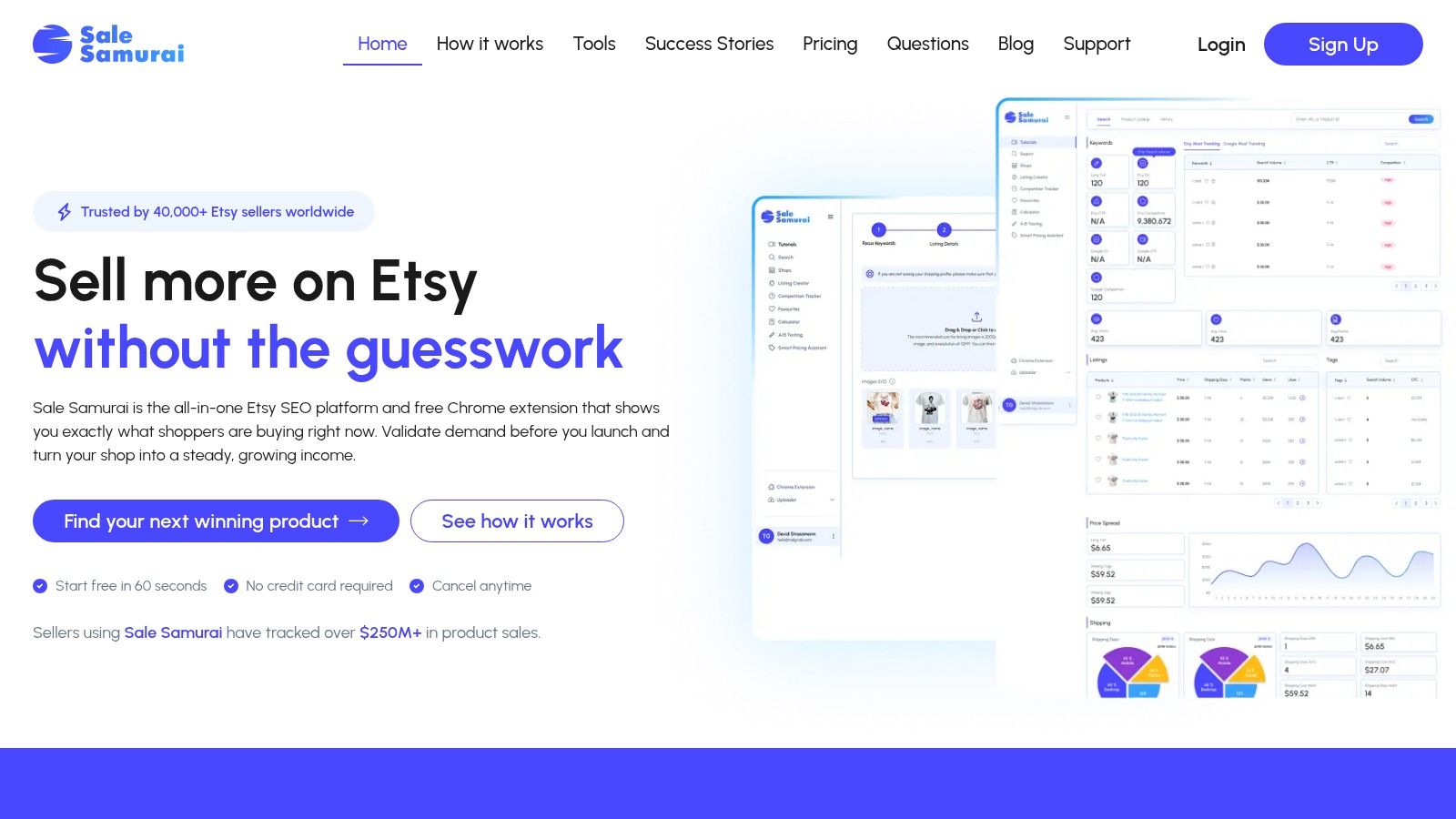
Sale Samurai combines keyword research with practical listing experimentation. Its tools present Etsy search-volume and competition trend data, while the listing tracker helps you monitor chosen products over time. Built-in A/B testing guidance and calendars give the research a clear next step.
That focus makes Sale Samurai useful for sellers who don't want keyword research to end with a spreadsheet. You can turn a phrase into a listing hypothesis, schedule changes, and compare what happens after implementation. The tool also includes fee calculators and pricing guidance content, which helps connect search decisions to basic commercial planning.
A testing-oriented option
The freemium option makes the platform approachable for basic exploration. Its practical content is another advantage, particularly for sellers who need help turning SEO research into testing decisions rather than collecting more metrics.
Quotas are the main constraint on free use, and older blog posts may mention legacy prices. Check the current Etsy seller tools landscape and Sale Samurai's live pricing page before comparing plans. Don't base a purchase decision on an archived price reference.
Sale Samurai is a good fit when your research cycle looks like this: find a phrase, assess competition, update a listing, track it, and test a variation. It isn't the obvious choice for a seller who only wants autocomplete ideas or a large cross-platform keyword export.
6. InsightFactory
InsightFactory is built around recent momentum. Its trend and keyword research includes 7-day sales indicators, giving sellers a short-term view of what appears to be moving now. That makes it more relevant to time-sensitive products, seasonal launches, and fast-changing niches than a tool focused only on broad evergreen ideas.
The platform also supports competitor and shop tracking. Its Magic Listing feature generates titles, tags, and descriptions quickly, while trademark and copyright checks add a useful risk-control step before a trend becomes a listing. Country-specific analysis covers the US, UK, Canada, Australia, and Germany, which is useful when the same phrase behaves differently across markets.
Momentum isn't the same as durable demand
InsightFactory's strongest use case is answering, “What seems to be selling recently?” That isn't the same as proving that a keyword has stable demand or that your listing will rank. Short-term indicators can be valuable for timing, but they can also overemphasize temporary events, fandoms, or sudden product interest.
The credits-based model suits light users who want to control spend. Heavy research requires checking whether a selected tier provides enough credits for repeated analysis, generation, and tracking. The system can take some getting used to, so plan a small test workflow before relying on it for every listing.
7. EtsyHunt
EtsyHunt covers a wide range of Etsy research jobs in one platform. It combines keyword analysis, product and shop databases, ad analysis, competitor tracking, listing optimization, browser extensions, and a fee calculator. That breadth makes it attractive to sellers who want operational helpers alongside an Etsy keyword tool.
The product and shop databases are particularly useful for moving from a phrase to a market view. You can examine the types of products associated with a query, investigate shops competing in that space, and then use SEO utilities to refine a listing. Its documented methodology notes and multilingual support also make the platform easier to evaluate across different seller contexts.
Broad coverage requires deliberate use
EtsyHunt's main benefit is consolidation. You won't need separate tools for every basic research task, which can reduce context switching. The cost is learning time. A large suite can encourage sellers to collect more signals than they can act on.
Check plan details carefully because the pricing interface may not always load smoothly. Don't assume a feature is included until the current plan page confirms it. The same caution applies to any modeled sales, competition, or demand estimates.
EtsyHunt suits sellers who need market research plus operational utilities. It may be more platform than necessary for a focused task such as generating a handful of long-tail phrases for one new listing.
8. Koalanda
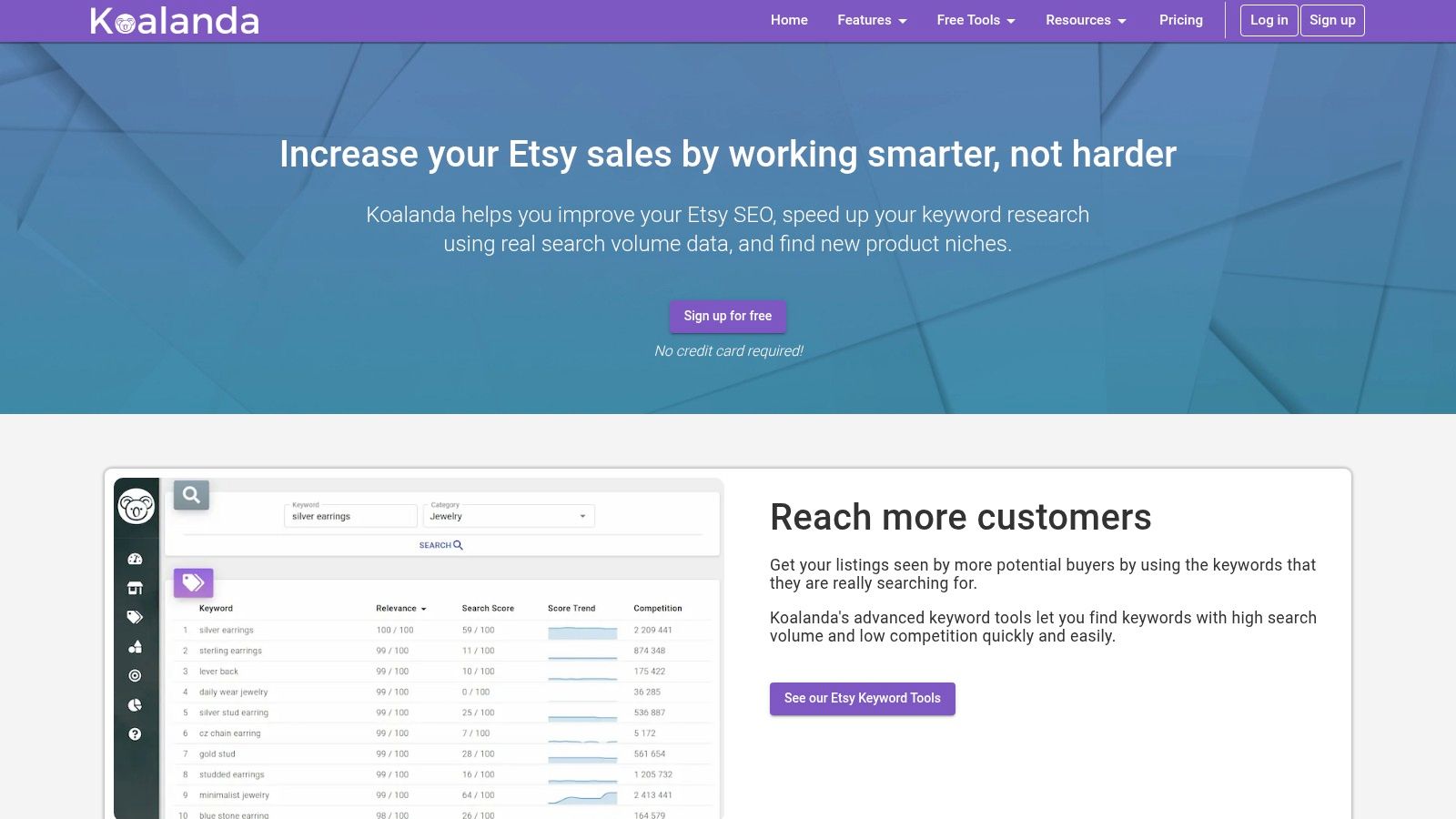
Koalanda keeps its focus closer to the core Etsy research loop: keywords, products, and competitors. Its clean interface supports quick checks, while curated trend lists give sellers a starting point for product and phrase discovery. That narrower scope can be an advantage when a large all-in-one suite would create unnecessary complexity.
Paid plans offer unlimited searches and keyword lists within plan limits, which makes Koalanda attractive for continuous scanning. Sellers can build and revisit keyword groups without worrying about a small lookup allowance interrupting every research session. Its budget-friendly annual positioning also suits shops that want ongoing access without adopting a broad enterprise-style platform.
A focused tool for repeated checks
Koalanda works well when the task is repetitive: check a phrase, compare competing products, save related ideas, and revisit the list as your catalog develops. The simple presentation lowers the friction of those routine checks.
Its ecosystem is smaller than platforms such as eRank or Alura, and it has fewer peripheral functions outside keyword and product research. You won't get the same breadth of listing audits, marketing utilities, or broader workflow support.
Choose Koalanda if budget and search volume of your own research activity matter most. Validate the tool's current plan limits before subscribing, because “unlimited” still operates within the conditions of the selected tier.
9. KeywordTool.io
KeywordTool.io's Etsy module is best understood as a high-volume idea generator, not a complete Etsy SEO command center. It harvests live Etsy autocomplete suggestions, which makes it useful for finding multi-word phrases that sellers may miss when they start with a single broad term.
Paid plans add estimated Etsy keyword volume and trend data, along with CSV and Excel exports, bulk operations, API access, and higher quotas on Pro tiers. Those functions matter to agencies, multichannel sellers, and teams that need to move a large keyword set into another analysis or content system.
Strong discovery, limited Etsy context
The platform can produce hundreds of long-tail suggestions quickly. That speed is valuable at the beginning of research, especially when you need phrase variations for different materials, recipients, occasions, styles, or product formats.
The trade-off is specialization. KeywordTool.io isn't Etsy-only, so its interface may provide fewer Etsy-specific cues than a dedicated marketplace suite. Paid plans can also be substantially more expensive than single-market tools, particularly if you don't need API access or large quotas.
Use it to expand the seed list, then filter phrases by buyer intent and inspect Etsy competition elsewhere. Don't mistake a long autocomplete list for a prioritized keyword strategy.
10. Etsy Marketplace Insights
Etsy Marketplace Insights is the baseline tool because it is Etsy's own first-party research environment. Inside Shop Manager, it surfaces related search terms, relative search frequency, competition context, and opportunities where buyer interest is high while competing listings are fewer. That makes it the closest available reference point for Etsy-specific demand.
Etsy positions Marketplace Insights as a way to plan inventory and SEO using internal marketplace signals. The tool is narrower than a full suite, though. It doesn't replace deep competitor databases, broad product discovery, or ongoing rank tracking.
Validate before you commit
The strongest workflow is not “use Etsy only” or “use third-party tools only.” Generate and expand ideas externally, then check promising phrases inside Marketplace Insights. Etsy's own guidance says exact keyword matches can improve relevance, so phrase structure should remain part of the decision, not an afterthought.
Etsy also says ranking depends on more than keywords. Relevancy, listing engagement, listing and shop quality, customer service quality, and shipping all contribute to search placement. New listings receive a small temporary boost while Etsy learns how shoppers interact with them, which means a keyword decision still needs a strong listing and a credible buyer experience.
For a practical explanation of how those signals fit together, see what Etsy SEO involves. Marketplace Insights is the validation layer, not a complete replacement for optimization, testing, or rank measurement.
Top 10 Etsy Keyword Tools, Features & Pricing
Tool | Core Features ✨ | UX / Quality ★ | Value / Price 💰 | Best For 👥 | Unique Strength 🏆 |
|---|---|---|---|---|---|
eRank | Keyword tool, Rank checker, Trends, Competitor audits | ★★★★, data‑rich, steeper learning | 💰 Affordable entry; clear daily limits | 👥 Sustained SEO researchers | 🏆 Established dataset & transparent usage caps |
Marmalead | Price spread insights, Marma AI writer, Chrome extension, title/tag guidance | ★★★★, integrated AI workflow | 💰 Mid‑range; annual/lifetime commitments | 👥 Sellers wanting AI listing help | 🏆 Built‑in AI + merchandising signals |
Alura | Keyword discovery, Listing scoring, A/B testing, shop/product DB | ★★★★, very approachable UI | 💰 Good value; usable free plan | 👥 End‑to‑end sellers who edit & test | 🏆 Smooth research → optimization flow |
EverBee | In‑search product analytics, Trends, Tag analyzer, extension‑first | ★★★★, fast visual validation | 💰 Freemium Hobby plan useful | 👥 Quick in‑search validation users | 🏆 Live overlays showing seller estimates |
Sale Samurai | Real‑time search metrics, Listing tracker, A/B testing calendars, fee tools | ★★★★, practical, straightforward | 💰 Freemium; clear pricing | 👥 Sellers focused on testing & pricing | 🏆 Practical playbooks + testing workflow |
InsightFactory | 7‑day sales signals, Trend lists, Magic Listing generator, country checks | ★★★★, speed / trend focused | 💰 Credits model; cost‑controlled | 👥 Time‑sensitive, trend‑driven sellers | 🏆 Short‑term momentum & fast tag generation |
EtsyHunt (EHunt) | Keyword & SEO tools, product/shop DB, ad analysis, extensions | ★★★★, broad but deeper to explore | 💰 Comprehensive suite; mid‑tier pricing | 👥 Users wanting wide analytics coverage | 🏆 Broadest all‑in‑one toolset + multilingual notes |
Koalanda | Keyword research, product & competitor analysis, trend lists | ★★★★, simple, clean UI | 💰 Very budget‑friendly; unlimited searches on paid plans | 👥 Budget‑conscious continuous researchers | 🏆 Unlimited searches on paid tiers |
KeywordTool.io (Etsy) | Etsy autocomplete harvesting, bulk export, API access | ★★★★, fast ideation at scale | 💰 Pricier for single‑market; enterprise quotas | 👥 Multichannel sellers & agencies | 🏆 Enterprise‑scale exports & API |
Etsy Marketplace Insights | First‑party related terms, demand indicators, opportunity signals | ★★★★, official baseline; limited depth | 💰 Free (within Shop Manager) | 👥 All sellers validating third‑party data | 🏆 Official Etsy demand & competition signals |
Build a Repeatable Keyword Workflow, Not a Tool Stack
The best result usually comes from combining a few research jobs, not subscribing to every platform listed above. Start with broad seed ideas from your product, customer, material, style, recipient, and use case. Then use autocomplete-led tools such as KeywordTool.io, eRank, Koalanda, or EtsyHunt to expand those seeds into specific multi-word phrases.
Next, group phrases by buyer intent. “Wall art” describes a category. A phrase that includes a room, style, size, material, recipient, or occasion reveals more about what the shopper wants. Keep category terms, product-format terms, audience terms, and seasonal terms in separate groups so you don't compare unlike phrases as if they had the same job.
Use third-party tools to compare competition, trend direction, listing patterns, pricing context, and apparent product momentum. eRank is useful for broad research and rank checks. Marmalead adds merchandising context. EverBee helps you inspect products while browsing Etsy. InsightFactory emphasizes recent momentum. Sale Samurai supports testing and tracking. These differences matter more than a generic feature count.
Treat estimated volume as a sorting signal, not a fact.
Before changing a listing, validate the strongest candidates in Etsy Marketplace Insights. Etsy doesn't publish a universal marketplace search total, so no third-party number can remove that uncertainty. First-party signals should decide whether a phrase appears to have meaningful Etsy relevance, while external tools help you discover alternatives and understand the competitive setting.
Then test a small, coherent keyword set in the listing. Put the primary phrase where it accurately describes the product, support it with relevant tags and attributes, and make sure the title still reads naturally to a buyer. Etsy says titles, tags, attributes, listing quality, customer experience, and shopper actions all affect search performance, so keyword placement can't compensate for weak images, unclear product information, or poor service.
Separate research from measurement. A discovery tool tells you which phrases to consider. A rank checker tells you where a listing appears for a query. Your shop's own Stats data tells you which search terms brought traffic to that shop, but it isn't a global keyword census. Review those sources together instead of asking one dashboard to answer every question.
A focused ranking service may be relevant when you already have one listing and one agreed phrase of three or more words. Upglider describes campaigns that target an individual Etsy listing and work toward the top 15 search results for the approved phrase, with campaign durations of 30, 90, or 180 days and a stated top-15 objective within 9 to 21 days from confirmed payment. Those service terms should be checked directly before purchase, and Upglider is independent from Etsy.
That kind of campaign is separate from keyword discovery and listing optimization. Research chooses the phrase. Optimization makes the listing relevant and persuasive. A ranking campaign addresses a narrower visibility objective for one listing, without replacing the broader work of building a strong shop.
Use the tools according to the question in front of you, validate modeled estimates against Etsy's first-party context, and keep a record of every phrase you test. If you need focused help with one listing and a specific long-tail Etsy query, review Upglider's Etsy ranking service and assess the listing, phrase, campaign terms, and measurement method before committing.