You've finished a listing, chosen the words you believe buyers use, and published it with high hopes. Then you search the phrase yourself and find the item buried several pages deep, or not visible at all. After changing the title, adding more tags, and searching again, the result still feels random.
The confusion is understandable. Etsy keyword ranking isn't a permanent score attached to your shop, and keyword placement is only one part of the process. Etsy first decides whether your listing matches a shopper's query. Then it decides how that listing should be ordered among the other relevant results. This article separates those two stages so you can see what Etsy documents, what sellers often assume, and what you can improve.
Why Your Listing Is Invisible for the Words You Chose
A seller named Maya creates a handmade silver ring. She uses phrases such as “silver ring,” “handmade jewelry,” and “minimalist ring” in her title and tags. The listing looks complete, but when she searches for “minimalist silver ring,” she finds competing products near the front and hers somewhere around page five.
Her first thought is usually, “Etsy hasn't indexed my listing.” Sometimes that's true. But often the listing is already eligible for the search. It's losing the ordering stage to other listings that Etsy considers stronger after matching the query.
That distinction matters. Appearing in search and ranking near the front are different outcomes. A title can contain the right phrase and still fail to attract clicks. A listing can receive clicks but few purchases. A shop can have relevant products but weak customer-service signals. Each issue can affect where the listing appears.
This guide to Etsy listings not showing up in search can help you check basic visibility problems, but the larger answer is more useful than a single troubleshooting list. Etsy keyword ranking is query-specific, so your listing doesn't earn one fixed position for every shopper and every phrase. Its position can change as shopper behavior, competition, seasonality, and shop performance change.
The practical promise is simple. You need the right words to enter the search pool, but you also need a listing and shop that perform well after Etsy shows them. Once you understand those two stages, a low position stops looking mysterious. It becomes a signal about which part of the process needs attention.
How Etsy Keyword Ranking Actually Works
Etsy's documented process is easier to understand as a shop-window competition.
First, Etsy looks for listings that could match the shopper's words. It uses titles, tags, categories, and attributes to identify relevant products. An exact phrase can be stronger than matching the same words separately. A listing for “sterling silver stacking ring,” for example, may create a more precise match than a title that scatters “silver,” “ring,” and “stacking” across unrelated wording.
Second, Etsy orders the relevant listings. At this point, keyword placement alone no longer explains the result. Etsy also considers what shoppers do after seeing a listing, along with listing quality, customer experience, and other marketplace signals. A well-matched listing can still sit below another relevant listing if buyers interact with the competitor more often or if the competitor's shop-level signals are stronger. Etsy describes this process in its official explanation of how Etsy search works.
Stage one gets your listing into the pool
Think of a weekend market where shoppers ask for “personalized birthstone necklace.” The organizer first sends them to stalls that sell necklaces with personalization and birthstone details. A seller offering plain metal chains won't enter that particular group, even if the product is attractive.
On Etsy, relevance creates the opportunity to be shown. Titles and tags matter because they help Etsy understand what the item is. Categories and attributes add structure and can support filtered searches. Accurate wording also protects you from attracting shoppers who want something different.
This is why stuffing a title with every related word isn't a reliable strategy. The listing still needs to describe the product clearly, and the phrases need to match what you sell.
Stage two decides the order
Once your listing qualifies, Etsy has to choose where it appears among many possible matches. Shopper behavior becomes important here. Clicks, favorites, and purchases after search exposure contribute to Etsy's assessment of listing quality. Conversion has a particular role because it shows what happens after a shopper reaches the listing.
The same listing can therefore hold different positions for different queries. It may be a strong match for “handmade silver stacking ring” and a weaker match for “wide sterling wedding band.” Even for the same phrase, results can vary because Etsy uses a dynamic marketplace system rather than issuing every shopper an identical permanent ranking.
The simple model: Match the words first. Then earn a strong reaction from the people who see the listing.
The Signals That Decide Where Your Listing Lands
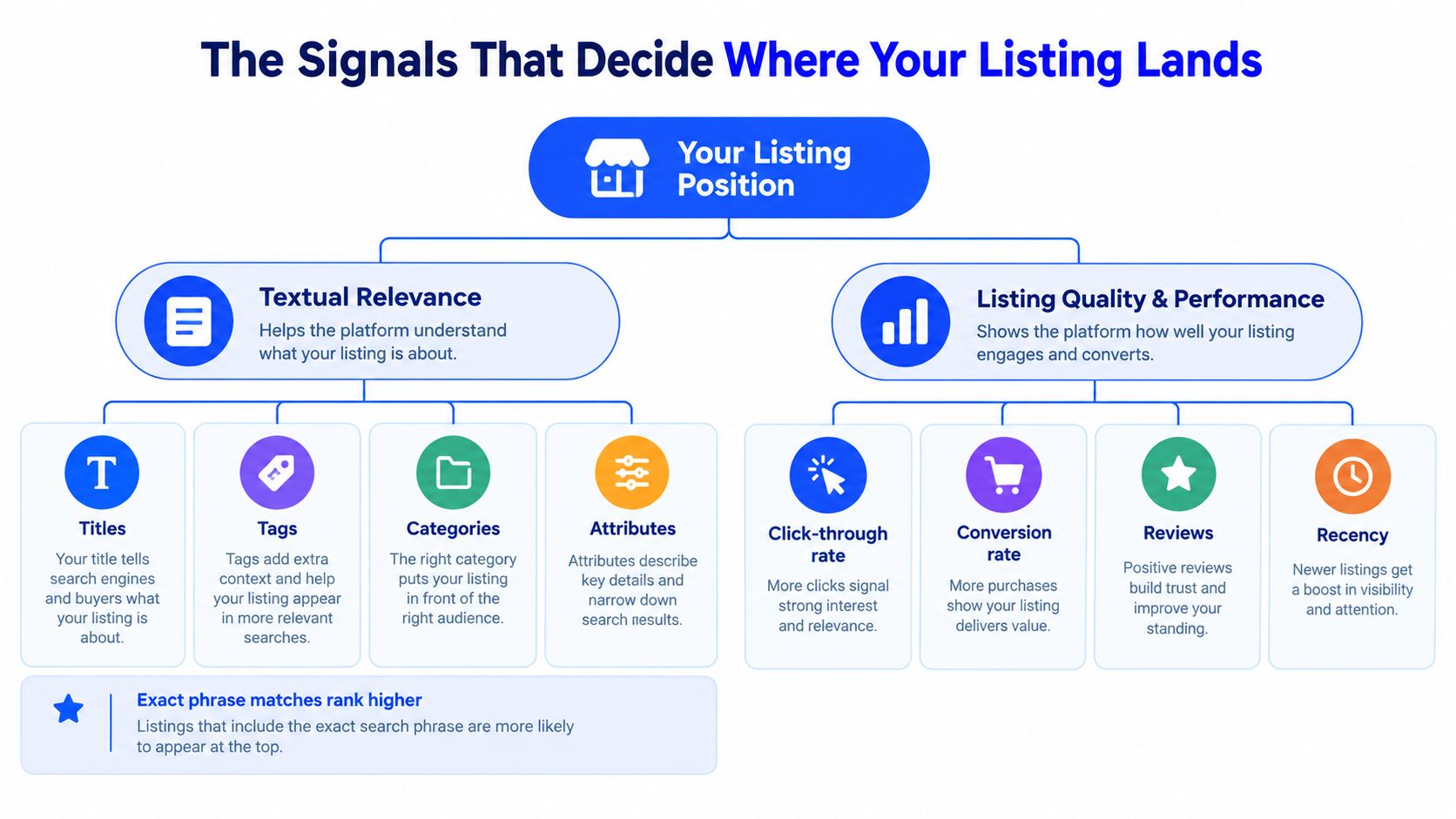
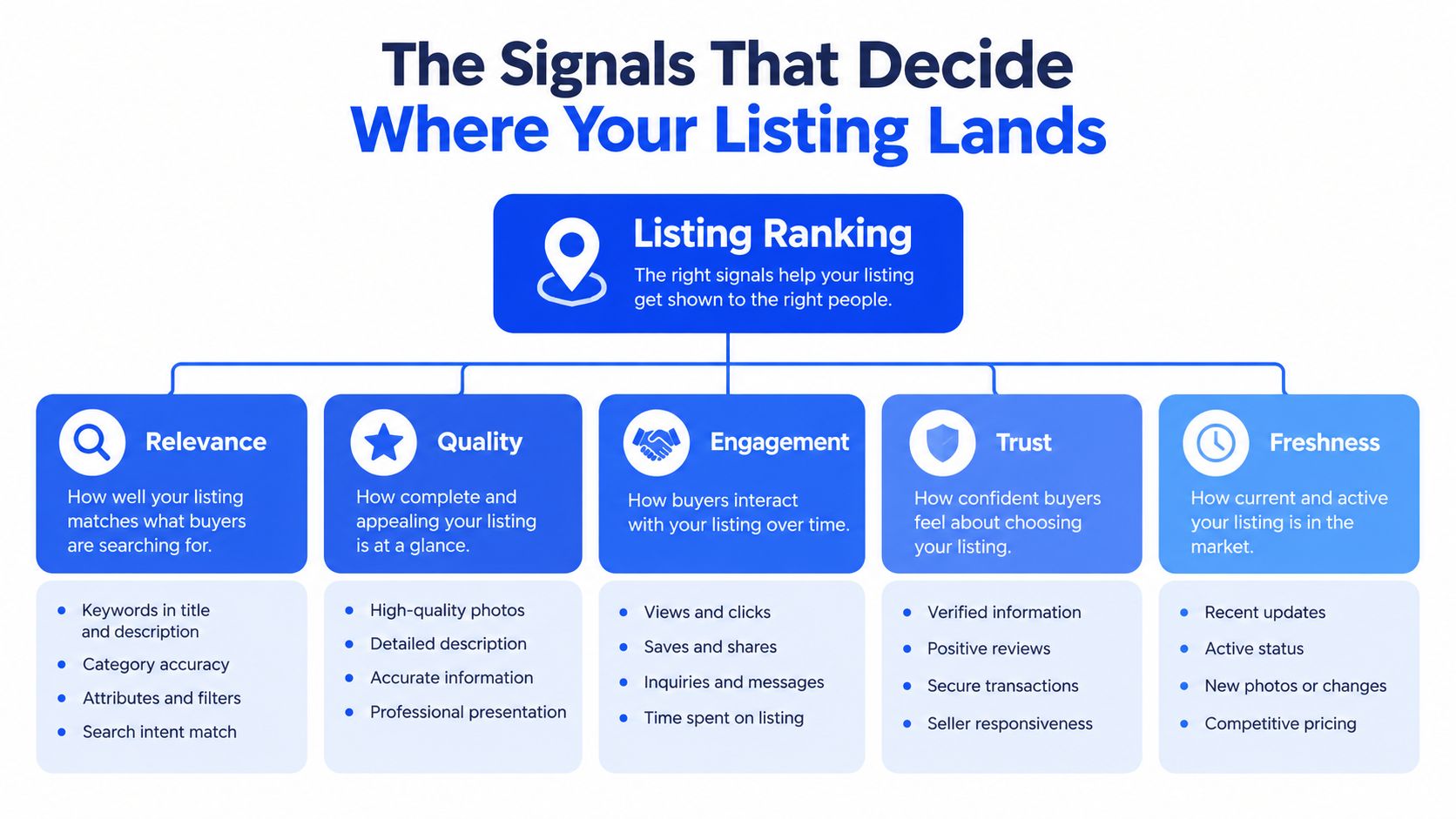
Etsy's ranking inputs fall into several groups. Some belong mainly to the listing, while others reflect the wider shop. Treating them all as “keywords” makes it harder to know what to change.
Textual relevance comes first. Etsy evaluates the title, tags, category, and attributes when matching a listing to a query. An exact phrase can carry more meaning than separate words placed far apart. Categories and attributes also help Etsy understand details such as product type, material, style, or other structured characteristics.
Listing quality reflects what shoppers do after exposure. Clicks, favorites, and purchases can contribute to the quality assessment. This is why a good keyword match doesn't guarantee a strong position. If shoppers see the listing but don't open it or buy it, the listing may not perform as well as another relevant option.
Customer and marketplace experience is partly shop-level. Etsy identifies review quality, message-response rate, case rate, and policy standing as relevant signals. Its customer-service guidance says that the average review rating, message-response rate, and case rate are measured over the previous three months. Etsy also identifies replying to a buyer's initial message within 48 hours as one of its customer-service standards. The official history of Etsy's customer and marketplace experience factors shows how search has expanded beyond simple keyword matching.
Recency can influence visibility over time. A new listing may receive attention as Etsy evaluates it, but recency isn't a permanent substitute for relevance or quality. A listing's position can change as its recent performance changes.
For shoppers in the United States, free shipping is also listed among the major search factors. That doesn't mean every seller can offer it profitably, but it does mean shipping can be part of the competitive picture.
Etsy Ranking Signals and the Shop Actions Behind Them
Ranking Signal | Listing or Shop Level | What You Can Do |
|---|---|---|
Titles and tags | Listing | Use accurate phrases that describe what buyers may search for |
Categories and attributes | Listing | Choose the most specific options that genuinely fit the item |
Clicks, favorites, and purchases | Listing | Improve the main photo, title clarity, price presentation, and product details |
Conversion | Listing | Make the item, offer, description, and delivery information easy to understand |
Reviews | Shop | Deliver the product as described and provide dependable service |
Message-response rate | Shop | Reply promptly, with Etsy identifying an initial response within 48 hours as a customer-service standard |
Case rate and policy standing | Shop | Set clear policies and resolve order problems responsibly |
Recency | Listing | Keep launching or maintaining relevant inventory without relying on freshness alone |
Free shipping in the United States | Listing or shipping setup | Review whether a free-shipping offer works for your margins and buyers |
The important pattern is that your listing doesn't rank in isolation. The shop publishing it carries a wider history. A new listing can appear without reviews, provided it doesn't have other listing or shop-quality problems, but a shop's wider customer experience can still shape how its listings compete.
Common Misconceptions About Etsy Keyword Ranking
Repeating the same keyword must help
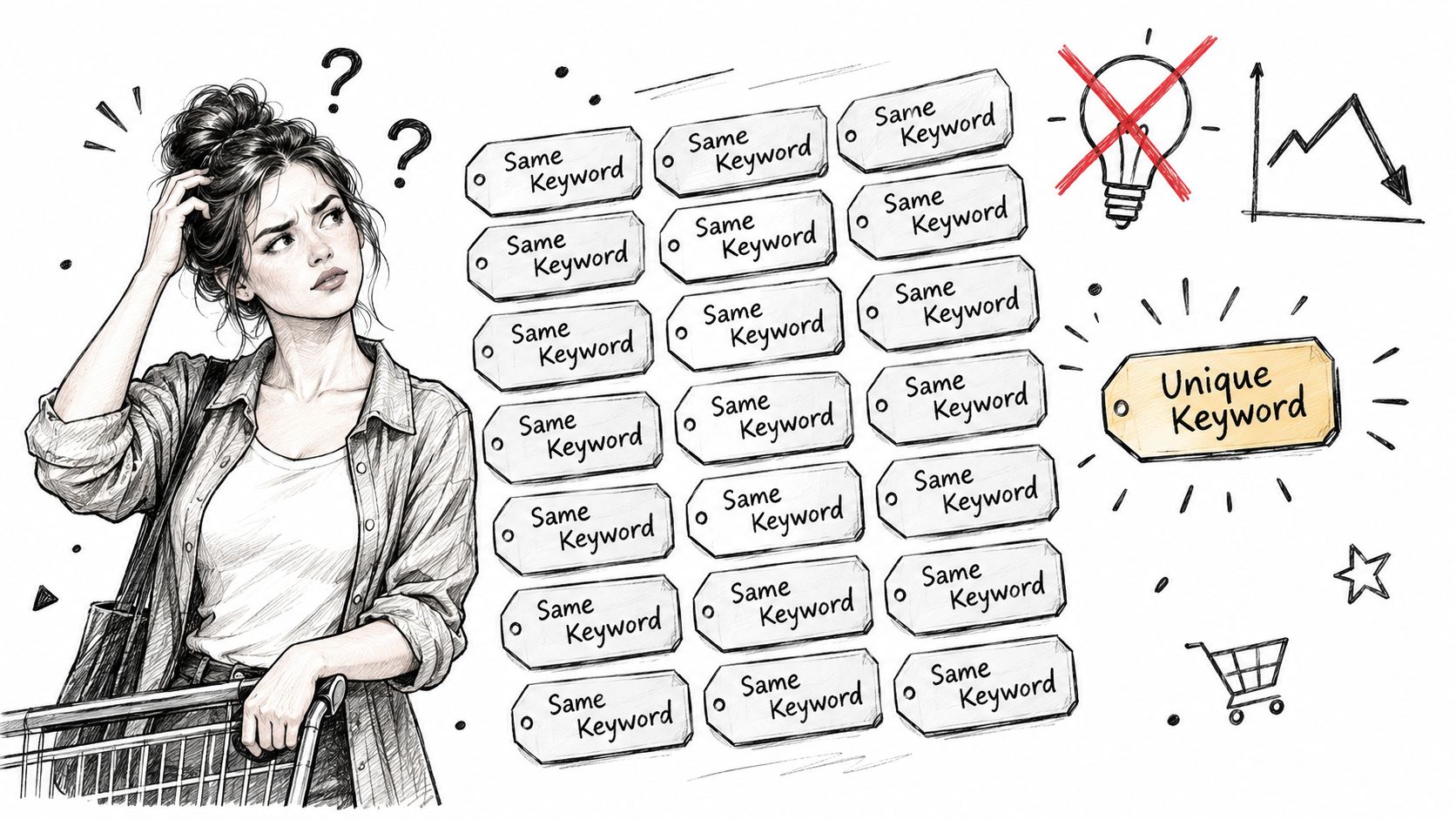
It's tempting to use “silver ring” in the title and every tag. More repetition feels like stronger emphasis, but Etsy recommends varied tags and natural multi-word phrases rather than isolated, repetitive terms.
Keyword placement helps Etsy identify a match. It doesn't force Etsy to put the listing ahead of every other relevant product. Repetition can also make a title difficult for a human shopper to read, which may reduce the chance that the shopper clicks.
Outside clicks automatically create lasting rank
This claim confuses correlation with causation. Etsy says listing engagement and customer experience matter, and its Context Specific Ranking system learns from shopper behavior. But a listing may get more clicks because it already matches the query better, has a more appealing image, costs less, fits a seasonal need, or reaches a high-intent audience.
External promotion may bring useful visitors, but the available evidence doesn't establish a simple formula in which buying clicks or sending traffic guarantees a durable Etsy ranking increase. Etsy reported in 2025 that it was testing more search signals, training models more frequently, and expanding AI-powered discovery. The same report listed 87.3 million active buyers in the second quarter of 2025, down 4.6% year over year, making relevance and efficient conversion important in a competitive marketplace. Those figures come from Etsy's second-quarter 2025 shareholder release, but they don't prove that any specific promotion tactic causes ranking gains.
A good position stays forever
It doesn't. Etsy ranking is dynamic. Competition changes, shoppers respond differently over time, and recent shop or listing signals can shift. A position that looks impressive today may fall when another listing earns stronger buyer responses.
New sellers also don't need to wait for reviews before appearing in search. Reviews can support shop trust, but a new listing remains eligible if it doesn't have other quality problems.
Practical Ways to Improve Your Keyword Ranking
Start with one listing, not your entire shop. A handmade silver ring gives us a useful example because buyers may search by material, style, use, or design.
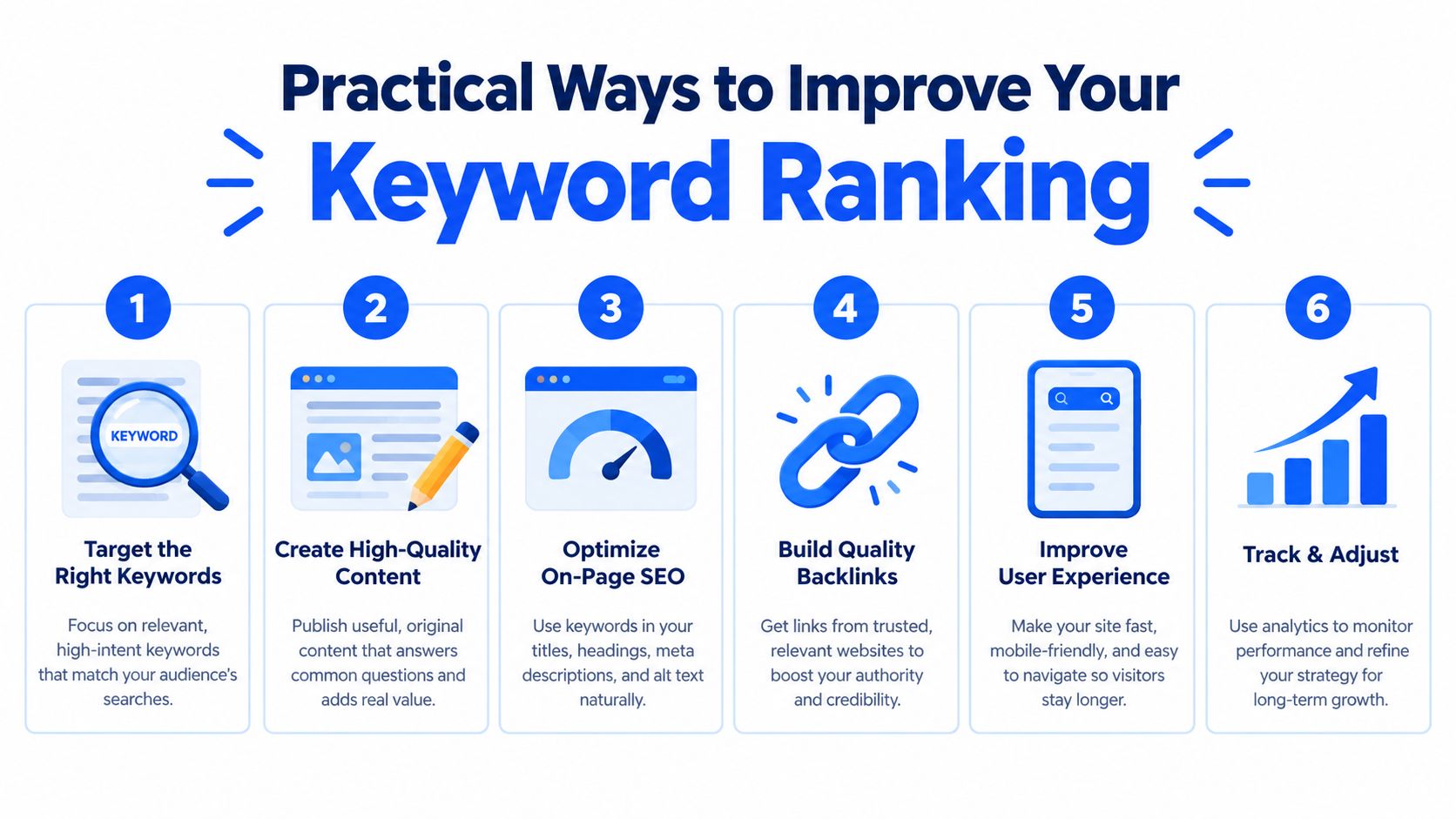
Build a precise match
A weak tag set might use:
Generic product: “ring”
Broad material: “silver”
Loose style: “jewelry”
Repeated wording: “silver ring” in several variations
A stronger set might describe the actual product with phrases such as “sterling silver stacking ring,” “minimalist silver ring,” or “handmade ring for stacking,” assuming those descriptions are accurate. These phrases give Etsy clearer information and give shoppers a more specific reason to click.
Etsy gives sellers 13 tags per listing and recommends using all of them. Its guidance also recommends multi-word phrases written in natural language and encourages variation across the tags. The official checklist for optimizing an Etsy shop supports using the available tag space to describe the item accurately rather than repeating one phrase.
Make the title sound like a product, not a word pile
Lead with the clearest description of the ring, then add useful details a buyer might care about. “Sterling Silver Stacking Ring, Handmade Minimalist Band” reads more naturally than a string of disconnected keywords.
A readable title can earn a click because the shopper understands the product immediately. That click is part of the second stage, where the listing must perform after matching.
Complete the structure around the keywords
Choose the most accurate category. Fill in relevant attributes such as material and style. These details reinforce the meaning of the title and tags and may help Etsy connect the listing with filtered searches.
Don't choose an attribute because it sounds popular. If the ring isn't made from sterling silver, don't use that phrase to attract a shopper. A false match may bring an initial visit, but it creates a poor buying experience.
Improve what shoppers see after the match
Keyword work creates an opportunity to be shown. Your first photo, supporting images, price, delivery information, and description influence what happens next. A shopper who can't judge the ring's scale or finish may leave, even if the phrase matched perfectly.
Practical rule: Treat the title and tags as the shop sign, and treat the listing itself as the storefront. A clear sign gets people inside. A convincing storefront helps them stay.
Use short paragraphs and specific product details in the description. Explain the material, dimensions, care, personalization process, and delivery expectations in language a buyer can scan. The aim isn't to hide more keywords in the copy. The aim is to remove uncertainty that can prevent a purchase.
If you want help identifying phrases before editing a listing, you can use an Etsy keyword tool for search research. Another option is Upglider, an independent service that focuses on promoting one Etsy listing for an agreed search phrase without requesting Etsy account access. Evaluate any external service by its measurement method and by what it can prove, not by promises of guaranteed algorithmic outcomes.
Etsy's own guidance connects conversion with search performance. Keywords create opportunities for visibility, while conversion helps Etsy evaluate how a listing performs after shoppers see it. The official guidance on conversion and search visibility is why keyword changes should happen alongside improvements to the buyer's experience.
Tracking Your Rank Without Fooling Yourself
Don't change the title, photos, price, tags, and shipping setup all at once. If the listing improves, you won't know which change helped. If it declines, you won't know what caused the problem.
Write down a simple baseline before making an edit. Record the target phrase, the listing's approximate position, impressions, click-through rate, favorites, add-to-cart rate, and conversion rate. Etsy's Shop Manager search-visibility information can help you review the signals Etsy identifies as relevant to visibility.
Keep the comparison fair
Rank position can be affected by more than your edits. Note any major price change, new main photo, inventory change, seasonal period, or Etsy Ads activity. Compare similar periods where possible, and avoid treating one search as a final verdict.
A listing may move because a holiday is approaching, because a competitor sold out, or because Etsy showed it to a different audience. Those changes don't automatically prove that a new tag caused the movement.
Look for durable patterns
A useful test asks whether gains remain after a promotion stops. Compare impressions with clicks, clicks with favorites or add-to-cart actions, and visits with purchases. A higher position with no improvement in buyer response deserves a closer look.
You can also use an Etsy rank checker as one input, but don't confuse a tool's result with a universal position. Etsy ranking is query-specific and can vary by shopper context.
Spend a few minutes each week recording the same measures. You don't need a dramatic change to learn something. A stable position during an important seasonal window may be more useful than a brief jump that disappears when promotion ends.
A Simple Way to Remember How Etsy Ranks You
Remember one sentence: match the words, then win the reaction.
The first part is eligibility. Use an accurate title, varied tags, the right category, and complete attributes so Etsy can understand the item and connect it with a shopper's query.
The second part is ordering. Once shoppers see the listing, their behavior matters. Clicks, favorites, purchases, conversion, listing quality, customer experience, and shop-level trust can all shape how the listing competes with other relevant products.
That's why Etsy keyword ranking isn't a badge you earn once. It's a query-specific result that can change as shoppers respond, competitors improve, and your shop's recent performance develops.
Use this short checklist when you review one listing:
Refresh the language: Replace vague or repetitive tags with accurate, descriptive phrases.
Improve the storefront: Check the main photo, price clarity, product details, and delivery information.
Complete the structure: Confirm that categories and attributes describe the item correctly.
Support buyer trust: Respond to initial messages within 48 hours and maintain dependable shop practices.
Measure before guessing: Record a baseline, make a focused change, and watch the response over time.
Don't chase a perfect position after one edit. Choose one important listing, make one clear improvement, and measure what happens. That steady process will teach you more about your shop than repeatedly refreshing search results.
Choose one listing today and write down its target phrase, current visibility, main photo, price, and recent buyer response. Then replace one vague tag with an accurate multi-word phrase, improve the first image or product explanation, and review the result against your baseline over time.