You typed a three-word phrase into Etsy, skimmed the first row, and clicked the listing that named the product before anything else. Shoppers do that all day. If your title opens with the shop name, a soft adjective, or five near-copies of the same word, they never reach the part that would have earned the click.
These title tag examples are written the way Etsy listing titles get read. A title tag is the HTML name of a page. The HTML5 specification treats that name as something that still has to make sense in a bookmark, a history list, or a search result, away from the rest of the page. On Etsy you do not paste a <title> tag, but the listing title does the same job. “Home” and “Product 1” fail it. “Handmade Ceramic Coffee Mug | Blue Speckled Stoneware” passes it.
Each pattern below is a template you can copy, then a before-and-after on a real three-word (or longer) phrase. The before line buries the phrase. The after line puts it where the eye lands first. There is no universal character formula in the spec. What matters is that the title still identifies the item when it is cut short.
Pick the pattern that matches the listing you are editing today. Front-load the phrase buyers type. Stop adding words that do not change the click.
1. Keyword-First Title with Brand Suffix
Template: [Exact 3+ word phrase] | [Short brand]
The main search phrase sits at the start. A pipe, then a short shop name, comes after. Readers and search systems see the topic before the brand. That is the usual structure for a product page, and it is the right default for most Etsy listings.
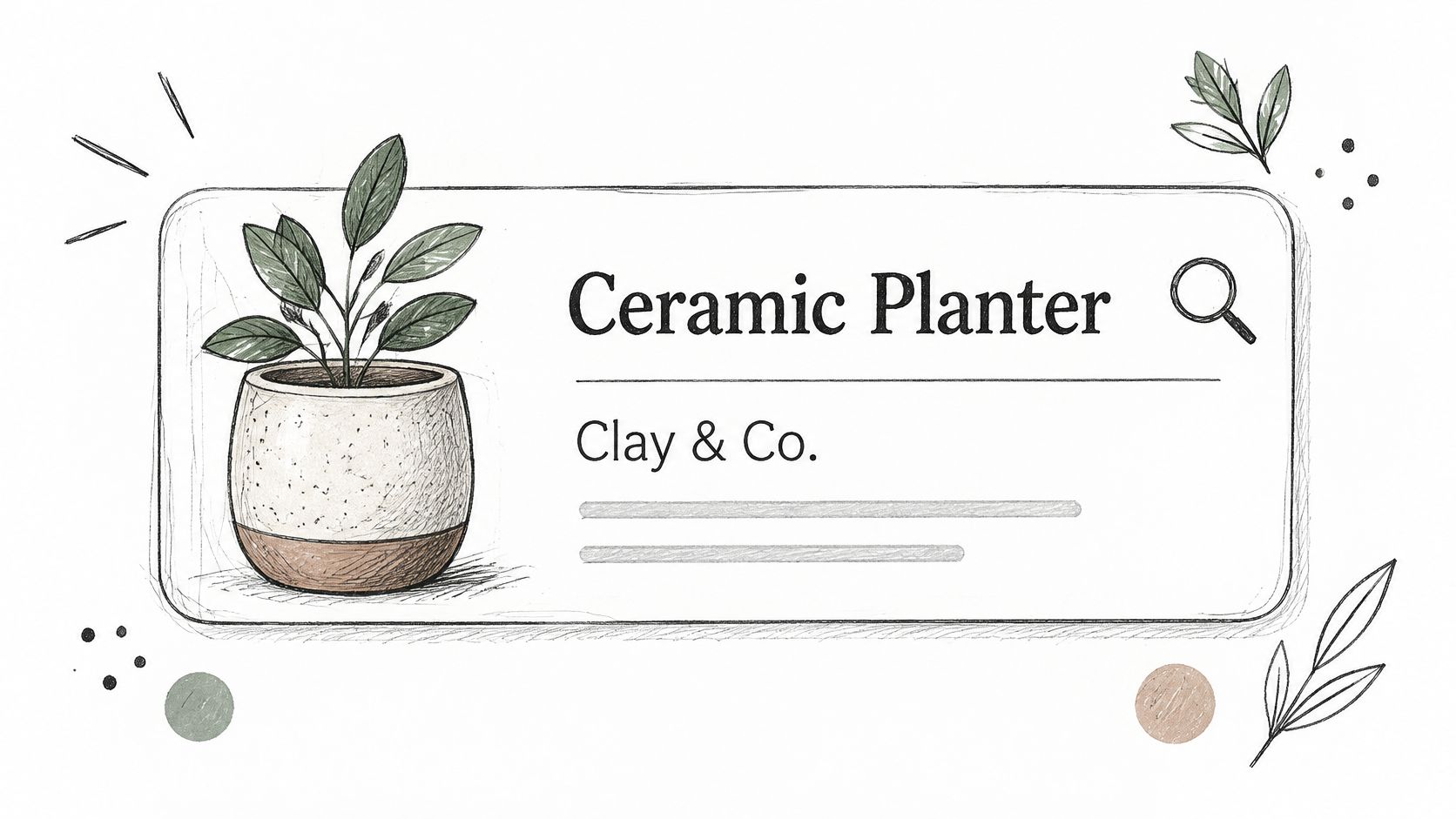
Before: Clay & Co. Shop, Planter, Plant Pot, Ceramic Planter Handmade
After: Handmade Ceramic Planter | Clay & Co.
The three-word phrase handmade ceramic planter is now the first thing on the line. The brand is still there, but it no longer eats the front of the title. Same move on two other listings: Organic Cotton Baby Blanket | Little Oak Studio and Leather Journal Cover | Northwind Crafts.
A stuffed version such as “hoop earrings hoop earrings silver hoop earrings” is weaker than Women's Sterling Silver Hoop Earrings | Minimalist Jewelry. Repetition does not add meaning once the phrase is already clear.
What to copy:
Put the exact phrase first. Do not park it after the shop name or a stack of synonyms.
Keep the brand short. A long studio name steals space from the product words.
Preview the full line. If the tail gets cut, the product words should already have been read.
Find the phrase with Etsy keyword research before you lock the wording. A pretty title on the wrong phrase still misses the search.
2. Product Plus Benefit Title
Someone searching personalized leather wallet already knows the object. They click when the next words answer why this one. A benefit, a material, or a gift use does that in a few words. Listings that only repeat the noun look identical in a row of twenty.
Template: [Product phrase] for [who or use], [one short benefit]
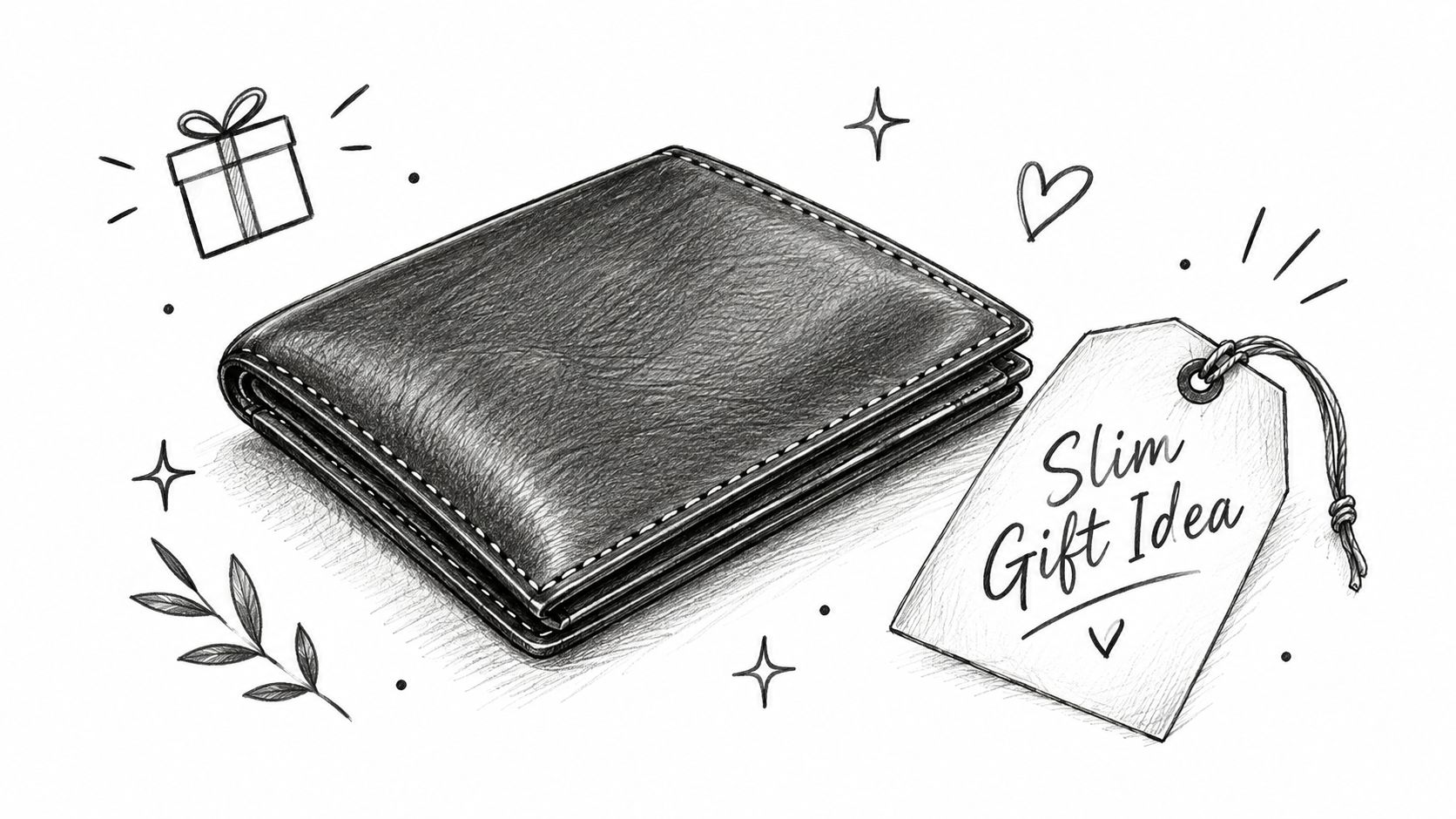
Before: Leather Wallet, Men's Wallet, Slim Wallet, Gift, Personalized, Bifold
After: Personalized Leather Wallet for Men, Slim Gift Idea
The phrase personalized leather wallet stays intact at the front. For men and slim gift idea are the only extras, and each one is something a buyer might type or recognize. Two more that follow the same cut: Linen Table Runner for Dinner Parties, Washable and Sterling Silver Stacking Rings for Everyday Wear.
Practical rule: One benefit. Two words if you can. A second benefit usually reads like padding, not like a reason.
Pull the benefit from search suggestions and from the words buyers already use, not from a feature list on your bench. Washable helps a dinner-party runner. Everyday wear helps stacking rings. Best amazing premium luxury helps neither.
What fails on this pattern
Stacking three benefits (slim, RFID, gift, travel, minimalist) turns the line into a keyword dump. Google's own title guidance, covered later in this piece, warns against that kind of repetition. On Etsy the same dump makes the listing look less specific, not more. More listing-title habits sit in these Etsy SEO tips.
3. Question-Based Title
A shopper searching how to clean sterling silver jewelry wants an answer they can use. A question-based title sets that expectation before the click. It suits a guide or FAQ, not a product page that only mentions silver.
Template: [Exact question]? [Short answer label]
Before: Sterling Silver Care, Cleaning Tips, Jewelry Guide, Home Methods, Polish
After: How to Clean Sterling Silver Jewelry at Home? Simple Guide
The question itself carries the topic; simple guide tells the shopper what format to expect. Keep the full title within roughly 60 characters, including the answer label. If the question takes up most of that space, shorten the label or leave it out. For example: What Size Wall Art Fits a 60 cm Frame? and How Long Does Hand-Dyed Yarn Last? Care Tips.

Answer the question plainly in the listing's opening lines. If the title promises a cleaning method, start with the method, not a shop origin story. This pattern works for guides, FAQ blocks, and how-to listings. It is a poor fit for a single mug unless the product directly addresses a question shoppers ask.
Length is a display problem, not a rule
A title-length analysis of 80,959 titles reports that titles over 70 characters were rewritten 99.9% of the time, while titles in the 51–55 character range had the lowest rewrite rate. Treat those figures as one study's findings, not a universal rule. Desktop titles are often estimated to display at around 600 pixels, or roughly 50–60 characters of ordinary text. That is a planning range, not a Google limit. Put the question's main topic first, and trim the answer label if the complete title runs long.
Use a question title when shoppers phrase their search as a question. For a straightforward product, choose a direct product title instead.
4. Number-Led List Title
A number tells the shopper the size of the promise before they click. 10 gift ideas is a scope. Gift ideas is a fog. The count has to match the page. A title that says twelve and a listing that holds four is a broken promise.
Template: [Number] [3+ word topic] for [audience or limit], [year if you will update it]
Before: Coffee Gifts, Gift Ideas, Lovers, Mugs, Under 30, Best Gifts 2026
After: 10 Gift Ideas for Coffee Lovers Under 30 Euro, 2026
Gift ideas for coffee lovers is the phrase. The number, the price cap, and the year are modifiers around it. Parallel versions: 7 Best Watercolor Paper Sets for Beginners and 12 Printable Wall Art Ideas for a Small Apartment.
A controlled test is more useful than guessing which number sounds stronger. TrustRadius tested 60 category URLs for two weeks: 20 kept the original titles, 20 used “Best [category] [year],” and 20 used “List of Top [category] [year].” The third format won on click-through rate and traffic. After that winner went live on the relevant page type, TrustRadius reported 22% sitewide traffic growth. The lesson is to test a full template against an unchanged control, not to tweak one adjective and call it a test.
How to run a small version on listings:
Hold the core phrase still. Try “Personalized Leather Journal,” “Best Personalized Leather Journal,” and “Personalized Leather Journal Gift” as separate structures, not as one stuffed title.
Compare like with like. Impressions, clicks, click-through rate, and average position, over the same length of time.
Split by page type. A format that wins on a gift guide may lose on a single SKU.
Only keep a year in the title if you will refresh the page when that year ends. A stale 2026 in 2027 is worse than no year at all.
5. Location-Modified Title
Origin and city words help only when buyers add them to the search. Handmade ceramic mugs is the product phrase. Made in Germany is a filter some shoppers type and many never do. If your studio is in Berlin, say so after the product words. If it is not, leave the place out. A false location is a trust problem, not an SEO trick.
Template: [Core 3+ word phrase] [true place], [one studio detail]
Before: Germany Mugs, Berlin, Ceramic, Handmade Mug, Studio, Hand-Poured
After: Handmade Ceramic Mugs Made in Germany
Two more that keep the place behind the product: Hand-Poured Candles, Berlin Studio and Bavarian Wooden Cutting Boards, Handcrafted. The city or region is verifiable. It is not the first word, because the first word should still be what the buyer came to buy.
Google's title-link documentation is clear that the <title> element is influential and not always shown as written. Google may build the visible title from the title element, the main heading, other headings such as an h1, og:title, and other prominent text. Titles can be truncated to the device width, and the element itself has no fixed length limit. Long, repetitive, or boilerplate titles are called out as things to avoid, and each page should have a distinct title.
What that means for a place name
If your Etsy title says Berlin and your first photo caption, your About blurb, and your H1-style listing headline say something vaguer, you have given the system a second, weaker name for the same item. Match them. Put the product phrase early so a cut line still says handmade ceramic mugs. Then check whether people in your target market search the place. A location nobody types is just a shorter title with a true fact in it, which is fine, but it will not create demand that was not there.
6. Value and Offer Title
A buyer comparing wedding signs needs to know whether the listing is a finished print or an editable file. For digital products and sets, name the format, file type, delivery method, or piece count directly. Those details define what the buyer receives. Skip the price unless it rarely changes, or a sale can leave the title out of date.
Template: [Product phrase] [format or set size], [file type or delivery]
Before: Blush Boho Seating, Wedding Sign, Printable, PDF, Editable, Template, Chart
After: Wedding Seating Chart Template, Editable PDF
Wedding seating chart template leads with the searchable product phrase. Editable PDF tells buyers what the offer includes. Apply the same approach to physical sets: Printable Wall Art Set of 3, Instant Download and Set of 6 Cloth Napkins in Linen, Washable. Keep details that help a buyer decide. Drop a second slogan.
Use the words that distinguish your listing from similar products. For a digital chart, that may be editable, PDF, and instant download. For napkins, it may be set of 6 and washable. Put the product phrase first, then add the offer details that matter. If the title gets cut off, the opening should still identify the item.
A simple edit shows how exact keyword placement changes the title:
Before: Editable Wedding Sign, Seating, Printable, Chart, Download
After: Editable Wedding Seating Chart Template, PDF Download
The three-word phrase wedding seating chart stays together, followed by the template and file details. That makes the item and its format clear without relying on a string of loosely related keywords.
For a physical set, use the same logic:
Before: Linen, Table Decor, Napkins, Set, Washable, Dining
After: Linen Napkin Set of 6, Washable
Here, linen napkin set names the product, while the piece count and washable feature clarify the offer. Include only details the listing supports. Extra adjectives crowd out information buyers use to tell one product from another.
7. Problem and Solution Title
Reviews already contain the title. Buyers write “my necklaces tangle in the box” and “pet hair on the sofa.” A problem-and-solution line uses those words, then names the fix. It works for organizers, care tools, and practical goods. It fails when the product does not fix the stated problem, or when the title uses always and never.
Template: [Problem in customer words]: [product that fixes it] or [Fix phrase] for [where it hurts]
Before: Necklace Holder, Jewelry Box, Organizer, Tangle, Storage, Beautiful
After: Tangle-Free Necklace Organizer for Jewelry Boxes
Tangle-free necklace organizer is the phrase a frustrated buyer would recognize. Two siblings of the same pattern: Stop Pet Hair on Sofas: Reusable Lint Roller Set and Non-Slip Yoga Mat Liner for Hardwood Floors. Each one names a place (box, sofa, hardwood) so the fix is specific.
If the listing cannot do the job in the title, change the title. Do not hope the photos will walk it back.
Read ten recent reviews before you write the line. Copy the noun they use for the mess, not the noun on your supplier invoice. Hardwood floors is a search. Floor surface is catalog language. Absolute claims (stops all pet hair, never slips) create refunds and also read as padding. A narrower fix is easier to believe and easier to match to a three-word query.
This pattern is a poor fit for decorative objects with no job. A vase does not need a problem. A liner for a mat that slides does.
8. Seasonal and Time-Bound Title
Seasonal demand is a window, not a personality. Christmas table runner is a phrase people type in a defined stretch of the year. A shipping date helps only if you will hit it. A year or a holiday that you forget to update becomes a reason not to click.
Template: [Season or event] [product phrase], [true cutoff or handmade note]
Before: Linen Runner, Table, Holiday, Christmas, Ships December, Handmade Decor
After: Christmas Table Runner in Linen, Ships by Dec 1
The phrase Christmas table runner leads. In linen is the material. Ships by Dec 1 is a promise, so only keep it if the cutoff is real. Rotate the same structure for other windows: Mother's Day Ceramic Vase Gift, Handmade and Autumn Wreath for Front Door, Dried Florals.
Start the edit before the peak, not on the week the search volume is already gone. When the season ends, change the holiday words. Leaving Christmas on a runner in March teaches shoppers to ignore your titles. A clear date is better than “ships soon,” and no date is better than a date you will miss.
Digital seasonal goods follow the same front-loading, with the file offer still visible. A Mother's Day printable that hides instant download behind a long sentiment loses buyers who need the file this week. The wording patterns for those files are covered in Etsy SEO for digital downloads. Update the year, the holiday, and the cutoff together. One stale token is enough to make an otherwise strong title look unmaintained.
Comparison of 8 Title Tag Examples
Title Pattern | Implementation Complexity | Resource Requirements | Expected Outcome | Ideal Use Cases | Key Advantage |
|---|---|---|---|---|---|
Keyword-First Title with Brand Suffix | 🔄 Low: place the main keyword first, then add the brand | ⚡ Low; check title length and keyword relevance | 📊 Topic is immediately clear; supports search matching and brand recognition | Product and category pages; Etsy listings | ⭐ Consistent, easy-to-apply structure |
Product Plus Benefit Title | 🔄 Moderate: identify a specific buyer benefit | ⚡ Moderate; research buyer search language | 📊 Improves relevance for shoppers with specific intent | Ecommerce product listings | ⭐ Explains both what the item is and why it may suit the buyer |
Question-Based Title | 🔄 Low to moderate: mirror a real search question | ⚡ Moderate; validate query wording and answer it in the content | 📊 Sets clear expectations and aligns with question searches | Guides, FAQs, sizing help, care instructions | ⭐ Directly addresses an informational need |
Number-Led List Title | 🔄 Low: use a number that matches the content | ⚡ Moderate; verify item count and update dated content | 📊 Sets scope and makes the list's promise clear | Roundups, buying guides, gift lists | ⭐ Gives readers a concrete sense of content |
Location-Modified Title | 🔄 Moderate: add a relevant, verifiable place name | ⚡ Moderate; verify origin or sales location and query relevance | 📊 Improves relevance for local or origin-specific searches | Artisan products and locally made goods | ⭐ Reaches buyers seeking a particular region or origin |
Value and Offer Title | 🔄 Low to moderate: state quantity, bundle, or format accurately | ⚡ Low; update details when the offer changes | 📊 Clarifies what buyers receive and reduces uncertainty | Bundles, sets, printables, digital downloads | ⭐ Makes the offer specific and easy to assess |
Problem and Solution Title | 🔄 Moderate: identify a real customer problem and accurate fix | ⚡ Moderate; use customer research and verify claims | 📊 Connects the listing with problem-based searches | Organizers, care products, functional items | ⭐ Links a clear need to a relevant solution |
Seasonal and Time-Bound Title | 🔄 Moderate: align the title with an event and selling window | ⚡ Moderate to high; plan ahead and refresh dates each season | 📊 Targets time-sensitive demand while the event is relevant | Holiday gifts, seasonal decor, event products | ⭐ Matches searches with timely purchase intent |
Steal These Patterns for Your Next Listing
You do not need all eight patterns on one listing. Keyword-first is the default for a physical product. Add one benefit, one true place, one offer detail, or one season word. Question titles and number-led titles belong on guides and roundups, not on every SKU. Problem-and-solution titles belong where reviews already name a mess.
The title you submit is not always the title people see. When the HTML or the Etsy title is already specific and Google still rewrites it, shortening the line or stuffing another keyword is the wrong next step. Compare the title with the visible heading, the Open Graph title, and the first lines of the page. A vague heading gives the system a second option. Google's title-link guidance favors titles that are unique, clear, and concise, and it warns against needless length and repeated keywords. A rewrite is not automatically a failure. Sometimes the generated line matches the query better than the one you wrote.
Decide in three moves. Accept the rewrite when it still leads with your product phrase and does not invent a claim. Align the heading, the opening text, and the title when they disagree. Test a different template when the phrase is right but the click-through rate stays flat and average position has not moved. Record impressions, clicks, and position before the change, then judge an equal period afterward.
Open one listing today. Pick the template that matches it. Move your three-word phrase to the front. Delete the repeated synonyms. If the title is already doing that job and the listing still is not visible for a specific longer phrase, a ranking campaign is a different kind of help than another wording tweak. Upglider runs focused campaigns on one Etsy listing and one agreed phrase of three or more words, with a top-15 goal, a set campaign length of 30, 90, or 180 days, and no Etsy password required. That is a fit when the words are already clear and the missing piece is placement in search, not another adjective.
Rewrite the listing in front of you before you open a second tab. The pattern is only useful once it is on a live title.