You're ready to promote a promising Etsy listing, but the campaign brief asks for one search phrase, one URL, and a clear ranking target. Then you notice the listing has weak photos, incomplete tags, and unanswered messages. External promotion can bring attention, but it can't repair every internal problem. The campaign requirements need to work both ways: the provider must define its deliverables, and you must prepare a listing that can turn visibility into buyer action.
Defining Upglider Campaign Requirements
A ranking campaign should begin with a written agreement, not a vague promise to “improve visibility.” The strongest brief identifies one listing, one exact search phrase, the intended Etsy market, the measurement method, and the deadline for judging progress. This follows the broader measurement principle that an objective must match an appropriate KPI and that the operating environment should match the measurement environment, as explained in the Out of Home Advertising Association of America case-study analysis.
“Get more exposure” is an ambition. “Reach an agreed results position for this listing and phrase under documented search conditions” is a campaign requirement. The second version gives both sides something observable to verify.
Turn the objective into a pass or fail test
Before payment, record these points:
Listing: the exact public Etsy URL.
Phrase: the precise multi-word query being tested.
Market: the shopper location and search context.
Result: the ranking range that counts as success.
Timing: the date the campaign starts and the deadline for the initial objective.
Evidence: how observations will be recorded and reviewed.
Etsy says search placement depends on more than keyword matching. Relevance, listing quality, engagement, customer experience, recency, shop location, and shop diversity can all affect discovery, while clicks, favorites, and purchases contribute to listing quality. The Etsy explanation of how search works makes the practical point clear: a ranking target is a controlled observation, not a permanent property of a listing.
Practical rule: Agree on what counts before anyone starts promotion. A screenshot taken under unknown conditions isn't a reliable acceptance test.
Campaign requirements also need to document responsibility. The provider can handle external promotion and reporting, while you control price, inventory, shipping, customer replies, fulfillment, reviews, and listing edits. A clear record of scope, reporting, timing, evidence, and payment conditions reduces disputes because both parties can assess the same facts. You can review how Upglider's campaign process is structured, but you should apply this discipline to any external service you consider.
Listing Eligibility and Pre-Payment Vetting
A listing shouldn't enter a ranking campaign just because its owner wants more traffic. Pre-payment vetting is a quality gate. External visitors may increase exposure, but weak photos, unclear purchase information, poor service, or a mismatch between the phrase and the product can prevent that exposure from producing the engagement Etsy uses in search evaluation.
Start with the listing itself. It must be active, policy-compliant, and relevant to the chosen phrase. Its title, tags, categories, and attributes should describe the same product and shopper intent. The images should make the item understandable without guesswork, and the description should answer practical purchase questions such as size, materials, variations, processing, and delivery.
Separate relevance from readiness
A phrase can be relevant while the listing remains commercially unprepared. Etsy identifies listing quality, customer-service quality, and engagement as ranking inputs. Its seller guidance also points to clear listing information, high-quality images, return policies, reviews, message responsiveness, case rates, and purchase-conversion behavior as important parts of the marketplace experience. Those factors make vetting more than a keyword checklist.
Use a simple pass or fail review:
Product fit: the item genuinely satisfies the phrase, rather than borrowing a loosely related term.
Content completeness: titles, tags, categories, attributes, images, and buying information are finished.
Shop health: policies are visible, messages receive timely replies, and there are no known service or policy problems.
Conversion readiness: the price, shipping offer, photos, and description give a qualified visitor a reason to buy.
Change control: edits, stock changes, service issues, and review developments are logged during measurement.
A new listing starts with a neutral quality score while Etsy gathers performance data, so early visibility doesn't remove the need to earn buyer response. If shoppers view an item but don't favorite, add to cart, or purchase it, the campaign may generate movement without creating durable performance. That's why an Etsy ranking service should be assessed by its qualification process, reporting, and scope, not only by its headline ranking objective.
Keyword Rules and Selection Criteria
The keyword decision determines whether the campaign is testing a real buying intention or chasing a broad phrase with little diagnostic value. Use one agreed phrase containing three or more words. Don't build the campaign around a single-word term, and don't treat a list of unrelated keywords as a substitute for a focused objective.
Multi-word phrases usually describe a clearer product need. A shopper searching for “ceramic blue coffee mug” has supplied more useful context than someone searching for “mug.” That doesn't guarantee a sale or a ranking position, but it gives you a more defensible match between the query, the product, and the listing page.
Apply the phrase test
Ask four questions before selecting the target:
Would the shopper expect this exact product? If the phrase implies a different material, style, use, or recipient, reject it.
Does the listing answer the phrase? The title, tags, categories, attributes, images, and description should reinforce the same intent.
Can the product compete on relevance and trust? Generic terms often expose weaknesses in photography, reviews, pricing, shipping, or shop information.
Can you measure the phrase consistently? Record spelling, word order, market, device context, personalization state, and whether the observation is organic or ad-driven.
Etsy states that search matching uses titles, tags, categories, and attributes, but ranking also reflects engagement, customer experience, recency, location, and shop diversity. Keyword placement alone isn't a ranking strategy. It makes the listing eligible for consideration, while buyer response and marketplace quality influence what happens next.
A precise phrase is useful because it narrows the test. It isn't useful if it describes an item your listing can't satisfy.
Keep the campaign focused on the listing with the strongest fit and the clearest commercial promise. If several phrases matter, assess them separately or use an explicitly documented add-on rather than changing the original target without notice. One phrase, one listing, and one measurement protocol make the result easier to interpret.
Required Inputs and Account Security Protocols
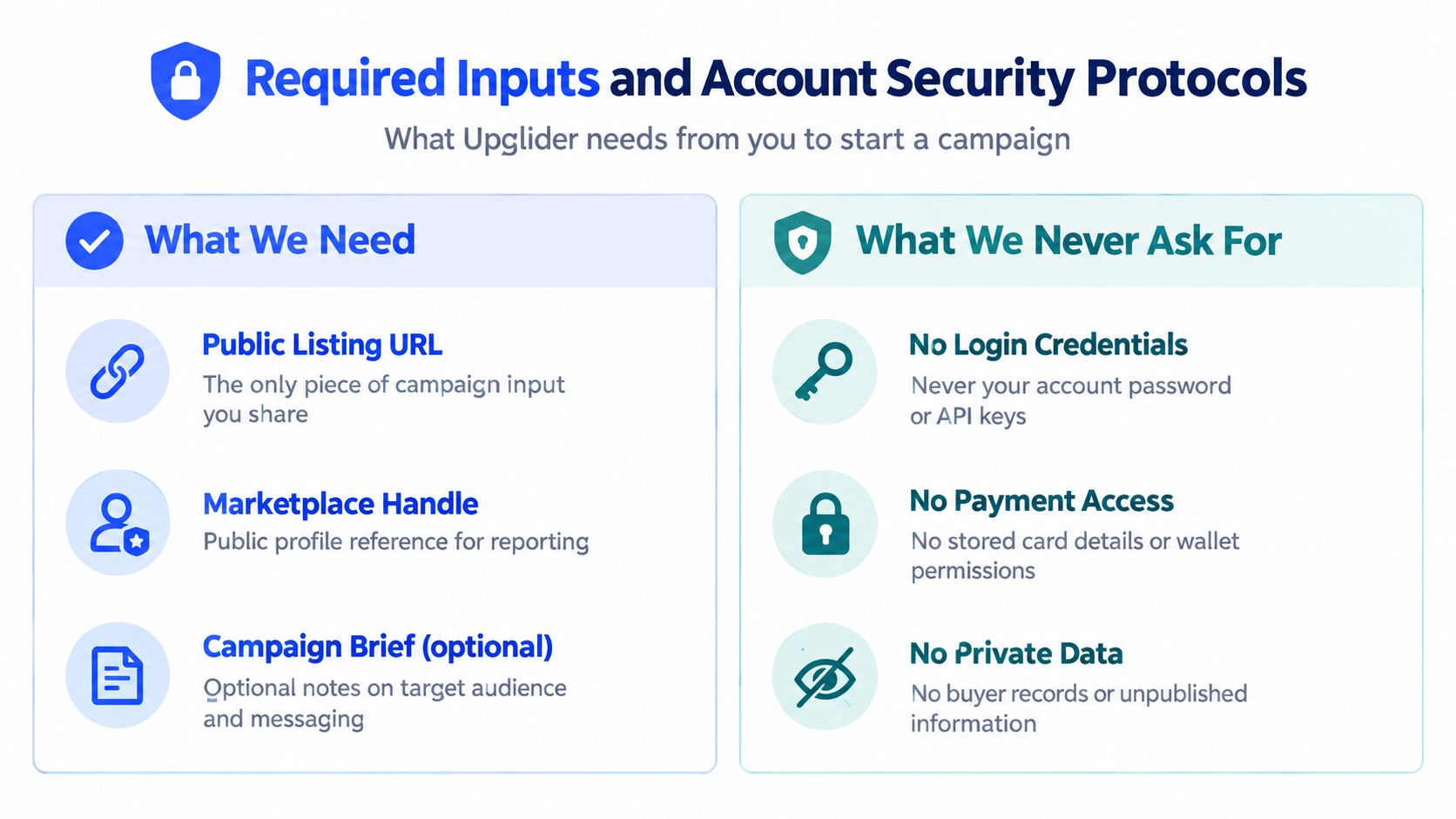
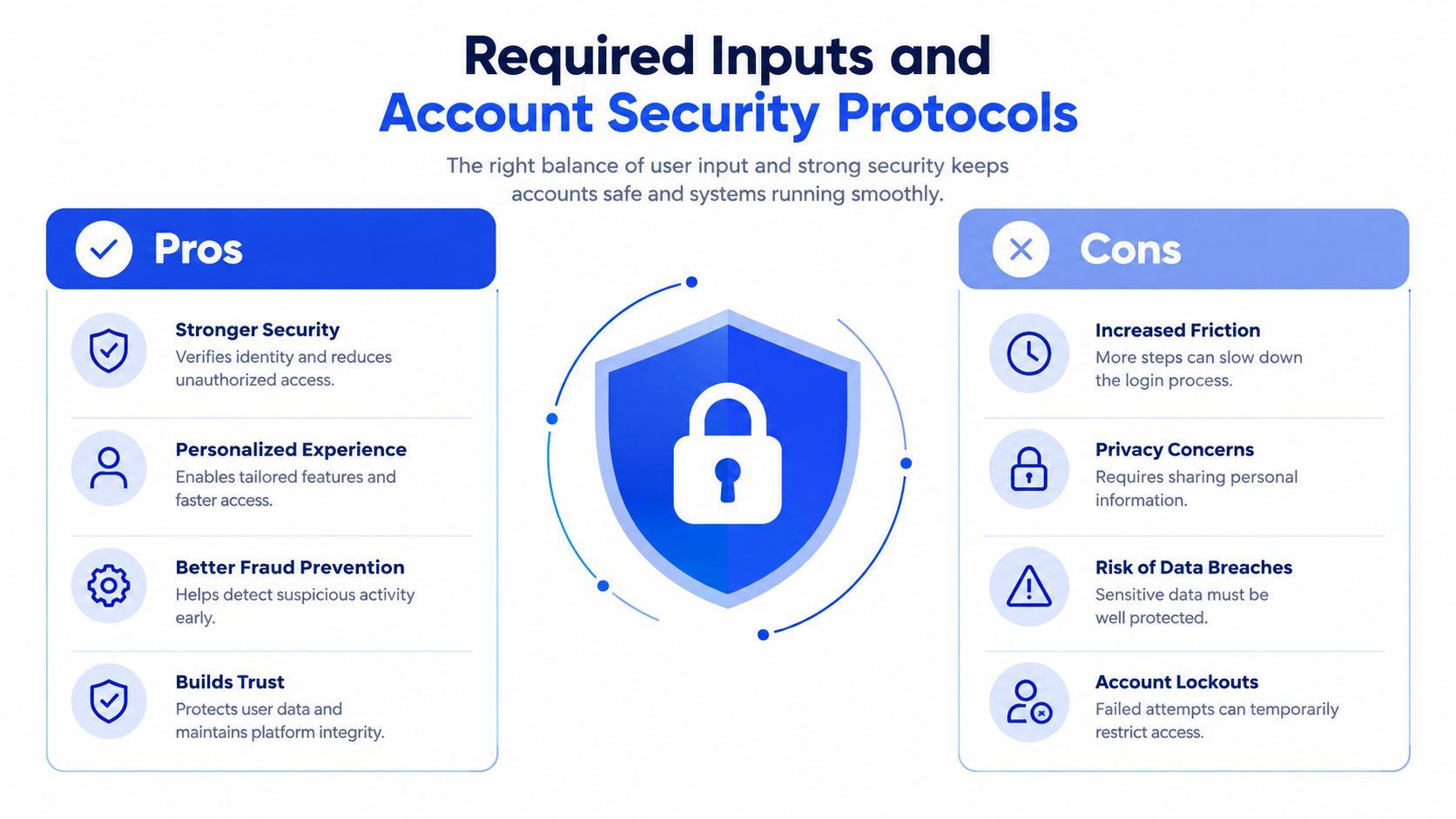
A legitimate external campaign shouldn't need control of your Etsy account. The sensible minimum is a public listing URL and the agreed search phrase. A public marketplace handle may support reporting, and an optional campaign brief can clarify audience or messaging, but your password, session token, API key, buyer records, and private shop data should stay with you.
Etsy Support says it won't ask sellers to share account or personal information through Etsy Messages, email, or social media. Etsy recommends a strong password and strongly recommends two-factor authentication, which requires a verification code when a sign-in comes from a different browser or new device. Read the platform's account security guidance for Etsy sellers before authorizing outside help.
Set boundaries in writing
Your agreement should state what the provider collects, where it stores information, who can access it, how observations are obtained, and what happens if the target position changes. It should also prohibit automated buyer messaging, review manipulation, misleading traffic, and any activity that could put the shop's reputation or policy standing at risk.
No-login access reduces credential exposure, but it doesn't make every promotional method automatically safe. Etsy's transparency reporting describes enforcement against spam activity, so sellers should require documented promotion methods and an escalation process if the marketplace flags activity. The report says spam-account removals increased 2.6 times year over year, while identified spam messages fell 74% to fewer than 1 million. Those figures come from Etsy's 2025 transparency report.
If you want help improving the listing before promotion, use a service that can advise without demanding account access, such as Etsy listing help from Upglider. Keep editing authority, payment access, and private customer information under your control.
Payment Options and Guarantee Conditions
Choose the campaign length based on the selling window, not on the excitement of seeing an initial ranking change. A short campaign can suit a focused launch or a time-sensitive product. A longer period makes more sense when the listing supports an ongoing collection, seasonal demand, or a flagship product that needs continued position monitoring.
Upglider offers 30-day, 90-day, and 180-day campaigns, paid once with no automatic renewal. Payment can be made by instant bank transfer, standard bank transfer, or crypto. Tax treatment and final terms should be visible before payment, so review the commercial details rather than relying on a sales message.
Campaign Length | Initial Ranking Window | Maintenance Period | Payment Structure |
|---|---|---|---|
30 days | Top 15 objective within 9–21 days | Remaining paid campaign period | One-time payment, no automatic renewal |
90 days | Top 15 objective within 9–21 days | Remaining paid campaign period | One-time payment, no automatic renewal |
180 days | Top 15 objective within 9–21 days | Remaining paid campaign period | One-time payment, no automatic renewal |
The guarantee condition is specific. If the listing doesn't reach the top 15 results for the agreed phrase within the initial 9–21-day window, the stated money-back terms apply. Read the final offer carefully for the exact verification method, because a guarantee is only meaningful when both sides agree on the query, market, device, personalization state, result-counting convention, and timestamped evidence.
Treat the guarantee as an acceptance condition
The guarantee doesn't promise permanent control over Etsy search. Etsy can change its ranking inputs, competitors can improve their listings, buyer behavior can shift, and your own shop health can change. A campaign provider can define its service commitment, but it can't guarantee Etsy's decisions indefinitely.
Freeze or log important variables during the measurement period. Don't rewrite the title, replace the photos, alter shipping, run conflicting promotions, let inventory disappear, or ignore customer messages without recording the change. If the listing fails the readiness gate, paying for a longer maintenance period won't solve the underlying problem.
Tracking Progress via the Status Dashboard
A useful dashboard should tell a seller what happened, what happens next, and which evidence supports the current status. The journey might begin with payment confirmation and eligibility review, move to phrase approval, then proceed to external promotion, rank observation, maintenance, and final reporting. Step-by-step updates are valuable because they separate completed work from assumptions about future performance.
Suppose you submit a public listing URL for a handmade wall print and an agreed multi-word phrase. The first dashboard entry should confirm the listing and phrase. A later note can record that the listing passed the relevance and readiness review. Once promotion begins, the dashboard should show rank observations under the agreed search conditions rather than just displaying a claim that the listing is “more visible.”
Read rank data in context
A reproducible check should record:
Query: the exact phrase, including spelling and word order.
Listing: the public URL being verified.
Search context: location, language, device, and personalization state.
Result type: organic placement separated from advertising.
Time: the timestamp of each observation.
Supporting signals: visits, favorites, carts, purchases, and conversion evidence where available.
A single screenshot can be useful evidence, but it shouldn't carry the whole decision. Etsy incorporates location, engagement, customer experience, and other context into search, so two shoppers may not see identical results. The dashboard should therefore show repeated observations and distinguish rank movement from the supporting indicators that may explain it.
Dashboard rule: Track the position you bought, but also track whether qualified shoppers respond to the listing.
That distinction protects your budget. A listing can reach a target position and still struggle if the product page doesn't convert. Conversely, a temporary rank change may become more meaningful when visits, favorites, carts, and purchases improve without unlogged listing changes. Review the studio notes for dependencies, keep your seller-controlled inputs stable, and judge the campaign against the original acceptance test rather than a general feeling that the shop is receiving attention.
Clear campaign requirements turn external promotion into a controlled business decision. Prepare the listing first, choose one phrase that matches real product intent, protect your account, and agree on evidence before payment. Then review your target listing against these gates and request a written campaign assessment that states the phrase, measurement conditions, timeline, maintenance period, payment terms, and guarantee conditions before you commit.