If you're staring at an Etsy draft, tweaking a logo for the fifth time, and still haven't listed anything, you're not alone. Most new sellers burn time on the easy part, the shop setup screens, then act surprised when the shop stays invisible. The hard part is not opening the store. It's building listings that Etsy can rank, then pricing them so the sales you get don't turn into busywork with thin margins.
How to sell on Etsy without wasting months comes down to a simple truth. Etsy is crowded, and the shop that gets found first usually wins the sale. Etsy reported 5.6 million active sellers and about 86.5 million active buyers at the end of 2025, which means there are roughly 15 buyers for every seller and intense competition for attention across categories and geographies. In the same period, Etsy also reported about $10.9 billion in full-year GMS and roughly $2.9 billion in revenue, so this isn't a sleepy niche marketplace. It's a mature, high-traffic platform where ranking matters from day one. Etsy marketplace scale and 2025 results
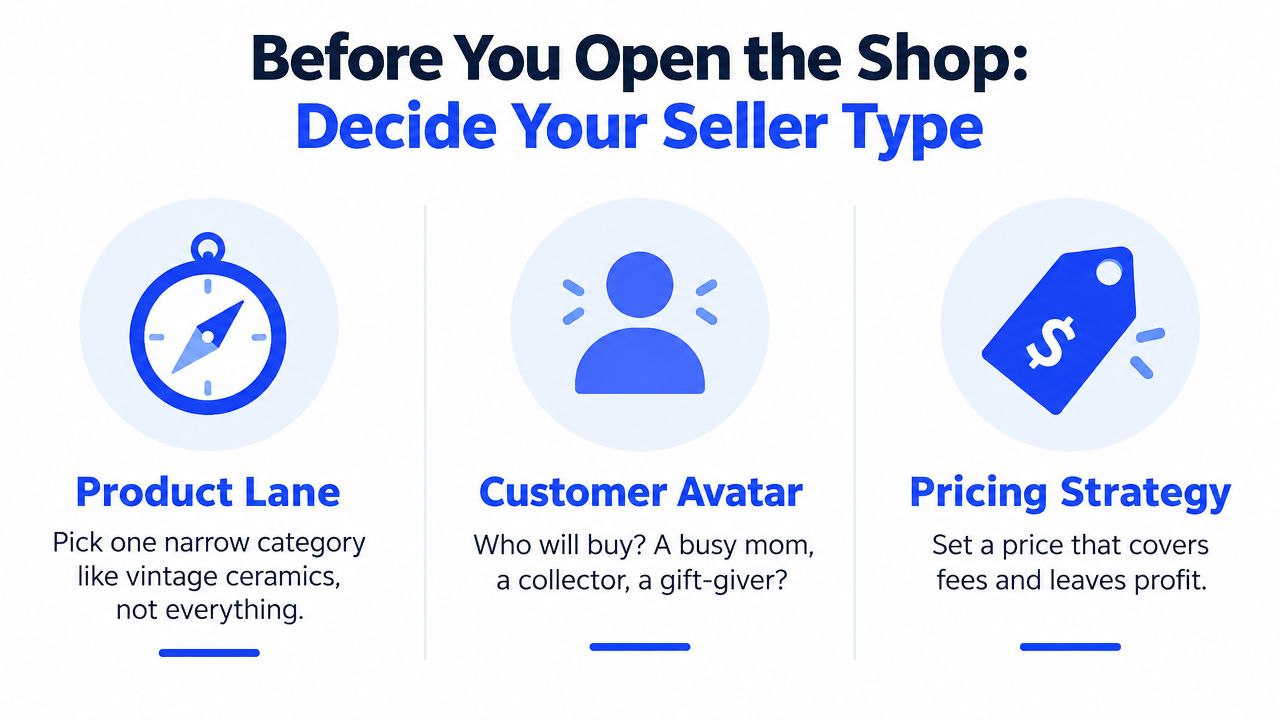
Before You Open the Shop, Decide What Kind of Seller You Actually Are
The people who fail on Etsy usually don't fail because they can't make a product. They fail because they open a shop without deciding what lane they're in. A vague “handmade” identity doesn't help you when you need twenty listings that all feel like they belong together. A tighter lane does.
Pick one product lane and stay in it
Choose one narrow category you can fill with a real catalog, not a random mix of things you like. “Linen baby sleep sacks” makes sense. “Creative gifts” doesn't. Etsy search rewards relevance, so a focused shop gives your listings a better chance of being seen as part of a clear product family.
The same logic applies to your production model. Print-on-demand, ready-made resale, and made-to-order each create different shipping promises, costs, and review pressure. If you don't decide that before you launch, you'll keep changing your pricing every time you hit a new problem.
Practical rule: if you can't describe your shop in one sentence, you're not ready to register yet.
Inventory reality matters too. Either you're listing finished units you can ship now, or you're starting with zero stock and making to order. Early on, pre-made stock usually gives you a faster path to sales because you can ship quickly and collect proof that the listing works. Registration comes after that decision, not before.
Setting Up the Shop the Right Way on Day One
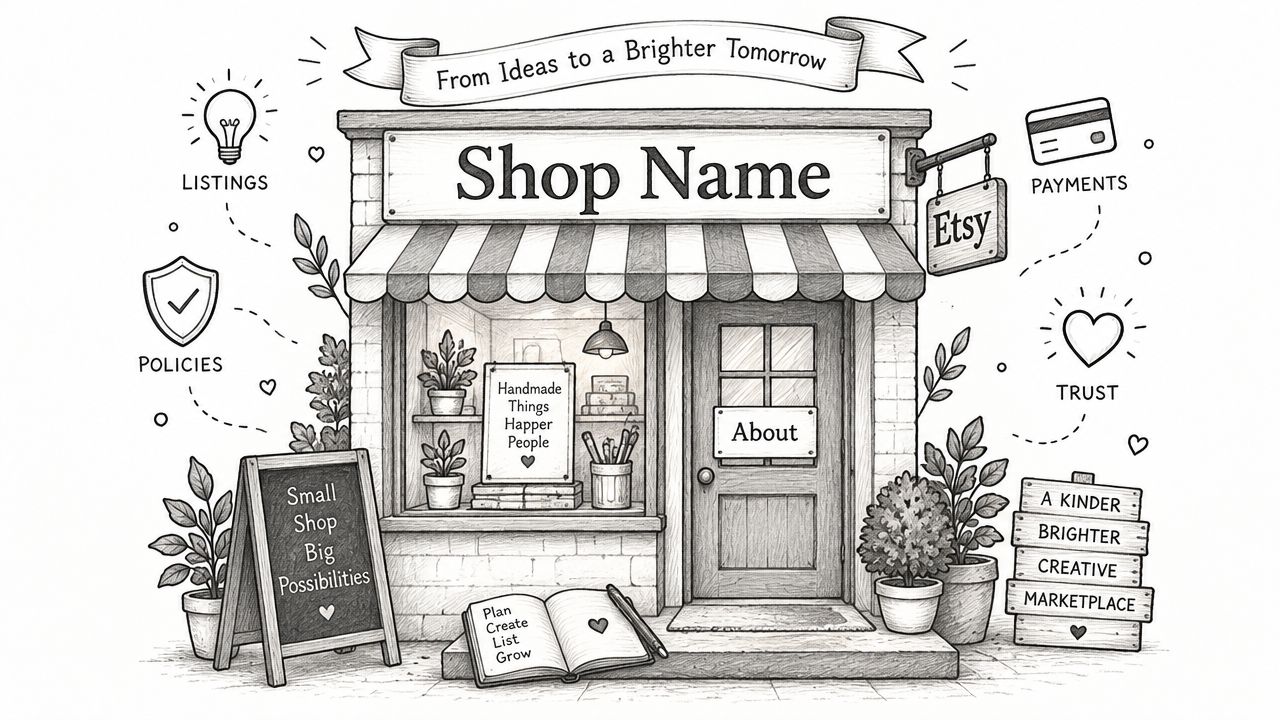
A shop that looks half-built makes buyers hesitate. They notice the name, the profile, the banner, and the policy page before they ever read a listing. If those pieces look random, the shop feels risky, and risky shops do not convert well.
Make the shop look real, not placeholder
Use a profile photo that looks intentional. Match the banner to the product line. Write the About section like a real seller, with a clear production story instead of generic filler. Buyers decide whether to trust a shop before they inspect an item, so these details carry real weight.
Be honest in the policies. If you make items to order, do not promise fast shipping you cannot keep. Late deliveries and return friction hurt the shop reputation that you are trying to build, and Etsy's ranking system includes shop-level trust signals, not just keywords, as Etsy seller guidance on shop quality signals makes clear. A sloppy setup can drag down search performance before the shop has a chance to prove itself.
The back end matters just as much. Verify payments, match the tax identity, and set the currency correctly so deposits move without problems. Processing times should reflect reality, because buyers judge the promise against the delivery experience.
Keep the invisible settings boring and correct
The settings buyers never see still shape performance. Currency, processing times, and private listings all affect how cleanly the shop runs once orders start coming in. Leave out the cleverness. Keep the setup consistent.
That is where new sellers waste time, on cosmetic tweaks that do nothing for sales. A shop that looks unfinished signals unfinished operations, and buyers react to that fast. They click less, and they convert less. Launching with a half-built storefront just gives people a reason to leave.
Building Listings That Earn Clicks, Not Just Impressions
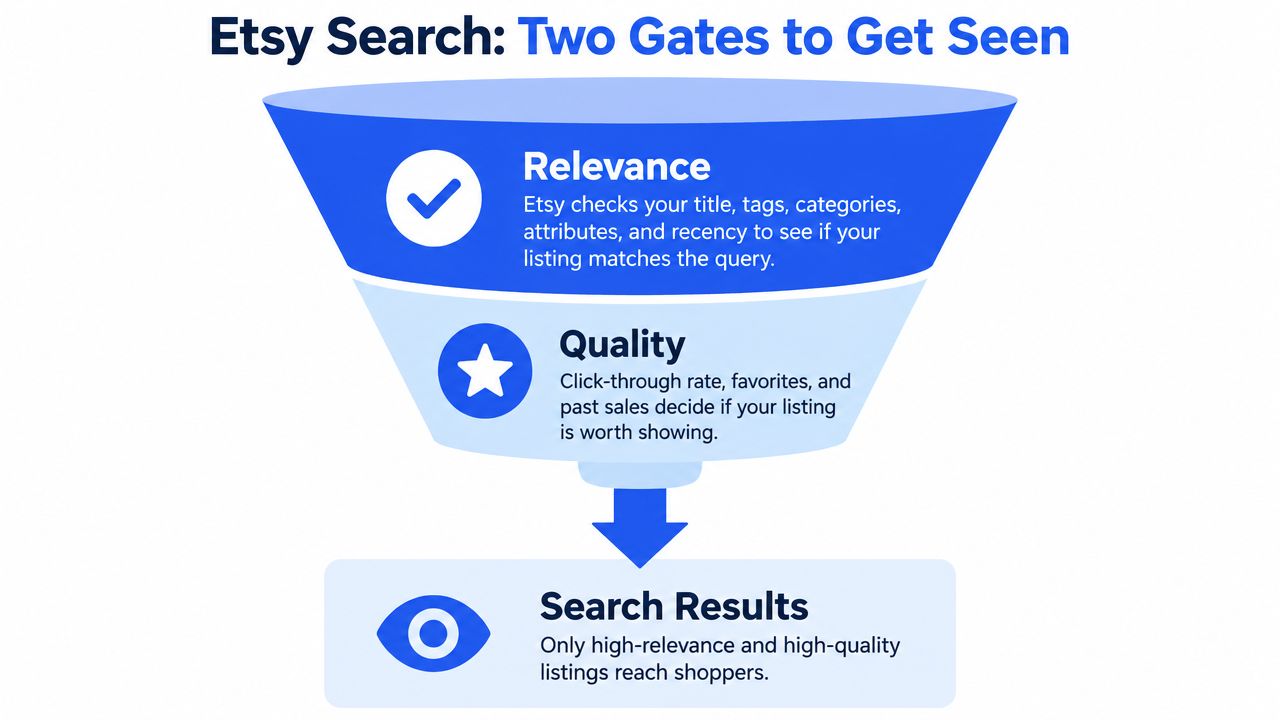
A listing isn't a product card. It's a ranking asset. Etsy first checks whether the listing matches the search, then decides whether the listing deserves more visibility based on how people react to it. If you treat the listing like ad copy, you'll miss both jobs.
Write for search, then for the shopper
Your title should start with the main phrase a buyer would type, then add one or two natural modifiers. “Ceramic planter with drainage, modern white” is useful. A stuffed string of awkward keywords is not. Buyers skim fast, and Etsy search needs readable relevance, not word soup.
Use all your tags. Don't waste them on single words when buyers type phrases. A good tag is something a real customer would search, not a generic category the platform already understands. Fill out the category and attributes fully, because those filters can decide whether your item even appears in a buyer's narrowed results.
For a deeper breakdown of listing structure and common mistakes, this guide on Etsy listing strategy is worth keeping open while you build.
Treat the first image like a sales rep
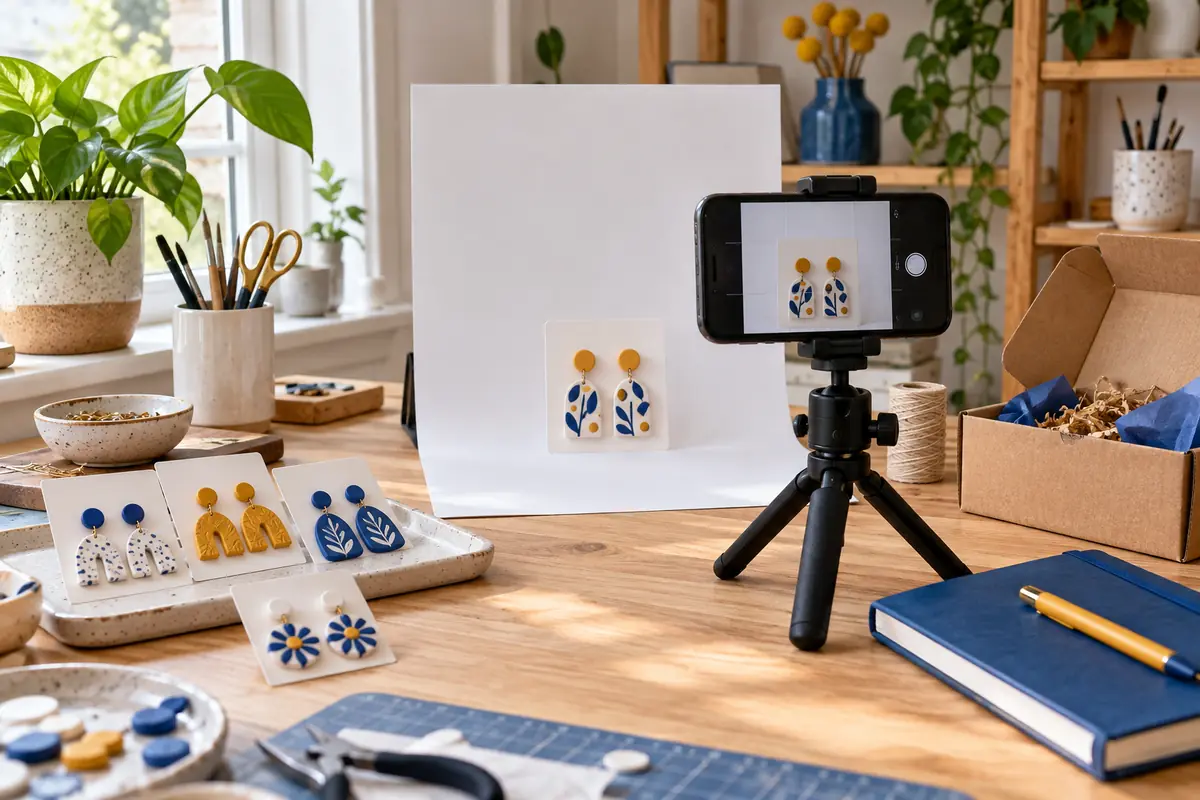
The first photo does the heavy lifting. It needs to stop the scroll at thumbnail size. Clean background, good light, clear context. A pretty studio shot that hides the product is a waste if buyers can't tell what they're looking at.
Subsequent photos should answer objections before they become returns. Show size, scale, texture, packaging, and the item in use. If someone has to guess how big it is, how it feels, or what arrives in the mail, you've already lost some of the sale.
Good listings don't just describe the product. They remove doubt.
Listings built as a relevance-plus-quality package beat listings built as ad copy. Etsy is not asking, “Does this sound exciting?” It's asking, “Does this match the search, and does it make people buy?”
How Etsy Search Decides Who Gets Seen
A shop can look polished and still stay hidden. Etsy search first checks whether the listing matches what the buyer typed, then it watches how that listing performs. If the match is weak, the item never gets a fair shot. If the click and purchase signals are weak, it slides back down. That is why keyword work and listing quality belong in the same conversation.
Relevance gets you into the room
The first filter is relevance. Etsy reads the title, tags, categories, attributes, and recency to decide whether a listing belongs in the search set at all. Weak keywords or half-filled attributes leave the listing with little chance to surface. Etsy search relevance and ranking workflow
Buyer language matters more than shop language. Shoppers search for the thing they want, not your brand name. One listing should center on one buyer intent phrase, then every other word should support that phrase. If you want a closer look at how sellers structure that work, what Etsy SEO actually is is a useful reference.
Quality decides whether the listing stays visible
Once the listing is in play, Etsy watches what happens next. Click-through rate, conversion rate, average review rating, message response rate, and case rate all feed the picture of whether buyers trust the shop. Etsy also points sellers to shop-level trust signals like average review rating, response rate, and case rate when it explains search influence.
That means correct tags are only the starting point. What buyers do after the click matters just as much. If they land, hesitate, and leave, search learns that the listing is not pulling its weight. If they buy, review, and come back, the listing earns a stronger position over time.
New shops can still compete, but they cannot be sloppy. Clean relevance, complete attributes, strong photos, and a first impression that answers buyer doubts matter more early on because there is little review history to support the shop yet.
A listing also has to survive the economics behind the click. If the price leaves no room after fees, shipping, and production cost, search traffic only makes the problem more visible. Weak conversion does not stay hidden for long.
Ranking isn't a one-time setup task
If a listing stalls, do not wait for it to recover on its own. Fix the photo, tighten the title, or change the offer. Search changes as buyer behavior changes, and stale listings fall behind fast.
The First 30 Days After Launch
The first month is where most sellers either get disciplined or drift. You don't need endless products. You need a tight launch, fast observation, and a willingness to cut weak ideas before they eat your time.
Week by week, not wish by wish
In week one, list a tight batch of 10 to 15 products with complete attributes and all tags used. Then do something active to create initial traffic. Post it, email it if you have a list, send a coupon, or tell people the shop is live. Waiting passively for organic discovery is a great way to sit in silence.
In weeks two and three, check Shop Stats regularly. Watch listing views, conversion rate, favorites, and the search terms that are surfacing the shop. If a listing gets views but no engagement, the problem is usually the photo, the price, or the offer itself, not the keywords.
By weeks three and four, stop giving dead listings extra grace. Rewrite the weak ones, prune the ones that clearly miss the mark, and put more energy into the listings already converting. First fulfillment also matters here. Respond quickly, ship on time, and don't create avoidable friction when the first order comes in.
Short rule: a listing with traffic but no favorites is telling you something. Listen to it.
First 30 Days, Weekly Milestones and What to Check
Week | Key Actions | Metrics to Watch | Trigger to Adjust |
|---|---|---|---|
Week 1 | Publish a focused batch of listings, complete every attribute, use all tags, and promote the launch | Listing views, first clicks, favorites | Low response to the first photo or title |
Week 2 | Check Shop Stats daily and compare listings against each other | Views, favorites, search terms | Views with no engagement |
Week 3 | Rewrite weak titles, swap photos, or refine pricing | Conversion rate, repeated visits | Traffic without sales |
Week 4 | Double down on listings that are already converting | Orders, response speed, fulfillment experience | Slow replies or avoidable shipping issues |
The point of the first 30 days isn't perfection. It's learning which listings deserve more attention and which ones are just taking up space.
Pricing for Real Margin After Etsy Takes Its Cut
Most beginner pricing mistakes come from copying another seller's sticker price. That's lazy, and it usually costs money. You need to price for margin, not for the illusion of competitiveness.
Know what a sale actually costs you
On a $30 sale, Etsy's 6.5% transaction fee is $1.95, and payment processing is 3% plus $0.25, which comes to $1.15. Etsy also charges $0.20 to list an item, and the transaction fee applies to shipping and gift wrapping when those charges are included in the order. Etsy fee structure
If Offsite Ads touches the order, that's another 15% for shops under the $10,000 trailing sales threshold. Etsy's fee documentation also notes that the offsite ad rate drops to 12% once a shop reaches or exceeds that threshold. Etsy fee rules and Offsite Ads charges
Deduction | Rate or Amount | Dollar Value | Notes |
|---|---|---|---|
Transaction fee | 6.5% | $1.95 | Applies to item price and charges for shipping and gift wrapping |
Payment processing | 3% plus $0.25 | $1.15 | Based on the sale amount |
Listing fee | $0.20 | $0.20 | Charged per item listed |
Offsite Ads | 15% | Variable | Applies to attributed sales for shops under the threshold |
Production and packaging | Varies | Variable | Depends on your actual cost structure |
That's before your production cost, packaging, and any shipping subsidy you choose to absorb. If you offer free shipping, you're still paying for shipping. The math doesn't disappear just because the buyer doesn't see it.
Don't confuse sales with profit
A competitor can look cheap because they're running a loss leader or because they're operating at a scale that changes their economics. You probably aren't. Price for the shop you run, not the shop you wish you had.
If you can't explain your margin after fees in one sentence, the price isn't ready. Rework it before you scale traffic.
A 90-Day Plan and When Ranking Help Actually Pays Off
A shop that lasts runs on a schedule. It tests, measures, and changes course with numbers, not moods.
Run the shop on a 90-day loop
In weeks 1 to 2, launch, polish, and make sure the listings are structurally sound. In weeks 3 to 4, review conversion in Shop Stats and fix weak offers. In weeks 5 to 8, expand what works, tighten keyword phrasing, and stop sending inventory to dead products.
By weeks 9 to 12, you should know whether the shop has real margin, whether inventory moves fast enough to justify more effort, and whether outside promotion is worth paying for. That is the point where ranking help stops being hope and becomes a business choice. For a realistic expectation of timelines, see how long SEO takes for Etsy sellers.
If you hire help, tie it to one listing and one search phrase. Upglider, for example, focuses on ranking one Etsy listing for one agreed search phrase, which fits a shop that already has signs of demand and wants more visibility on a single product.
Use this checklist before spending more
Promote first if the listing converts but does not get enough qualified traffic.
Refine the catalogue if buyers click but do not buy.
Pivot the product line if the shop keeps attracting the wrong search terms.
Hold off on paid ranking if photos, price, and fulfillment are still messy.
Push harder on the winners if one or two listings already pull their weight.
The sellers who do well are not the ones who post the most. They keep score, react to the score, and stop pretending weak listings will repair themselves.
If you want to sell on Etsy without wasting months on guesswork, open the shop only after you have chosen a narrow product lane, built one strong listing, and set pricing that still leaves room after fees. Then watch Shop Stats for 30 days, cut what does not convert, and commit more effort to what does. If your first listings are already getting clicks and sales, keep going. If they are not, fix the offer before you buy more traffic.